The Ecommerce space is crowded, and just having a great product isn’t enough. If your audience can’t find your online store, they can’t buy it.
PPC (Pay-Per-Click advertising) helps you show your products to the right people at the right time when users already searching with the intent to buy.
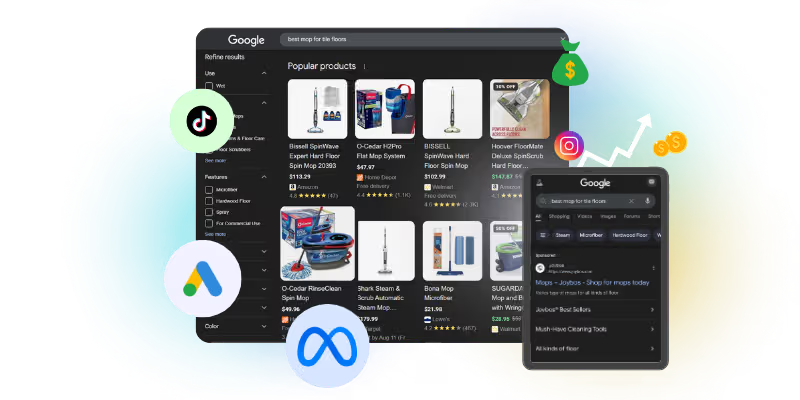
According to Google Economic Impact Report, Google Ads alone delivers about $8 in profit for every $1 spent.
For E-Commerce stores, PPC drives roughly 50% more conversions compared to organic traffic. And since 41% of clicks go to the top three paid ads, getting that top spot can make a real difference.
However, poorly managed PPC can quickly drain your budget with little to no return.
That’s why knowing how to set up, manage, and scale campaigns properly is just as important as running them in the first place.
This guide walks you through:
Whether you’re just starting or looking to fix underperforming ads, this breakdown gives you the insights to succeed with PPC in your online store.
What Is PPC in Ecommerce?
PPC, or Pay Per Click advertising, is a digital marketing model where you pay a fee only when someone clicks on your ad.
For example, when you search for something on Google like “best runner gear,” the top results often display the word “Sponsored” next to them. These websites are running PPC campaigns targeting the keyword “best runner gear.”
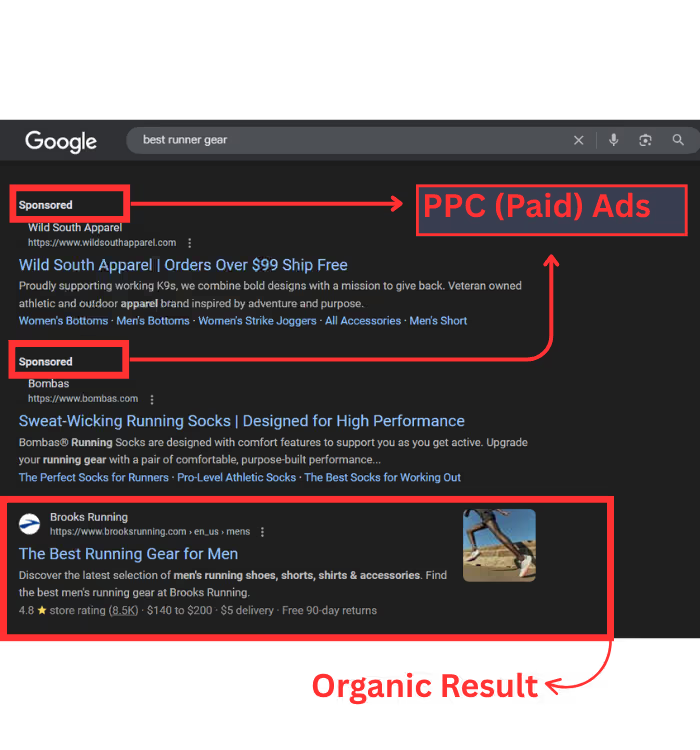
While organic traffic can take months to deliver results, PPC is impactful when you need outcomes right away. It’s a fast, measurable way to drive targeted traffic to your online store.
How PPC Applies to Ecommerce?
In Ecommerce, PPC helps you put your products directly in front of potential buyers on the platforms they already use. Instead of waiting for them to find you through search engines or social media.
However, before you launch a PPC campaign, you need to understand which platforms work best for your business.
Top PPC Platfrom
The most popular PPC platform is Google, covering Search, Display, and Shopping ads. Meta (Facebook and Instagram) is second major platform for PPC advertisement.
Now take a look at some common PPC platforms for E-Commerce:

- Google Ads – Search Ads, Shopping Ads, and Display Ads help target users with strong purchase intent.
- Facebook & Instagram Ads – Ideal for product discovery, retargeting, and dynamic carousel ads that convert.
- TikTok Ads – Reach trend-driven, mobile first shoppers with short form video ads and influencer-style content.
- Microsoft Ads – A cost-effective alternative to Google with typically lower CPCs and less competition.
Why PPC Works Well for Online Stores?
PPC is one of the most effective ways to drive immediate, targeted traffic to your online store.
In fact, 43% of all E-Commerce traffic comes from paid search, and Google Shopping Ads alone account for over 76% of retail search ad spend.
That’s because PPC helps online retailers capture users ready to buy, at exactly the right moment.
Here’s why it works so well in Ecommerce:
-
1. High Buyer Intent: Shoppers who use Google Search or Shopping are usually looking for something specific, often with the intent to buy.
That’s why clicks from these channels tend to convert better than broad, interest-based traffic.
- 2. Fast Results: SEO (Search Engine Optimization) takes months to show results, where PPC delivers traffic almost instantly. It’s perfect for product launches, flash sales, and testing new offers.
- 3. Full Control & Testing: You control your audience, timing, and budget. PPC also lets you quickly test headlines, offers, and CTAs to see what drives the best results.
- 4. Trackable ROI: Every click, cost, and conversion is measurable. You can calculate your exact ROAS(Return on Ad Spend) and optimize with confidence.
- 5. Remarketing = More Sales: Most store visitors don’t buy on the first visit. PPC lets you retarget cart abandoners and browsers with reminder ads that bring them back and close the sale.
Types of PPC Ads Used in Ecommerce
Different types of PPC ads are made to reach people at different points in their buying journey, from learning about your brand to actually buying your product.
Understanding how each format works helps you create a more strategic and effective campaign.
Each ad format plays a different role in the customer journey:
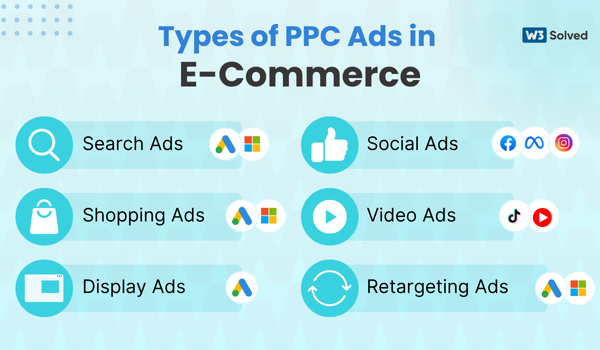
| Type of Ad | Purpose | Best For |
|---|---|---|
|
Search Ads |
Text-based ads on search engines
|
Shoppers actively looking for products
|
|
Shopping Ads |
Show product images, price, reviews
|
High-intent buyers comparing options
|
|
Display Ads |
Banner ads on websites and apps
|
Building awareness, remarketing
|
|
Retargeting Ads
|
Re-engage past visitors or cart abandoners
|
Recovering lost sales
|
|
Social Ads
|
Video/image ads on TikTok, Meta, etc.
|
Discovery and demand generation |
Choosing the right mix of PPC ads can make a big difference for your online store.
When each ad type matches a step in the customer’s journey, your campaigns become more focused, bringing in better traffic and more sales.
PPC Campaign Types for Google
Now that you know the common PPC ad formats used in E-Commerce, let’s look at how Google Ads organizes these into campaign types.
Each campaign type serves a specific purpose and can be matched to your product strategy and customer journey on Google’s platform.
| Campaign Type | Purpose | Best For |
|---|---|---|
|
Search Campaign |
Show text ads based on keywords users search |
Products with clear demand and strong search intent |
|
Shopping Campaign |
Display product-based ads with image, price, and reviews |
Physical products with competitive pricing and good visuals |
|
Performance Max (PMax) |
Automate delivery across all Google channels using machine learning
|
Stores with large product catalogs and enough conversions to train the system
|
|
Display Campaign
|
Visual banner ads across websites and apps |
Retargeting and top-of-funnel brand awareness |
|
Video Campaign |
Show ads on YouTube or video partners
|
Product education, testimonials, and storytelling
|
|
Smart Campaign |
Simplified version of search/shopping with minimal input
|
Very small budgets or local E-Commerce brands just starting out
|
|
Discovery Campaign |
Native image or carousel ads across Gmail, YouTube, and Discover feed |
Driving awareness and engagement through visually rich placements |
 Pro Insight
Many advertisers notice that the Performance Max campaign delivers a few early conversions, then slows down or stalls.
This is how the system collects learning data. PMax relies on conversion volume to optimize delivery. Without enough signals, it can’t consistently find high-quality traffic.
What matters most is volume and quality.
Accounts that generate at least 25–30 consistent conversions per month tend to see stronger, more stable performance over time. Until then, relying solely on PMax can lead to wasted spend and misleading early results.
This is why experienced advertisers often start with Search or Standard Shopping campaigns to build data and only activate Performance Max once the account has enough conversion history to support it.
What to Consider Before Launching a PPC Campaign
You can technically launch ads right away but without a proper conversion-focused plan, you’re likely to waste money fast.
Going in blind often leads to low clicks, poor targeting, and missed opportunities.
Before running your first PPC campaign, take a moment to set things up properly. A bit of planning upfront can help you avoid costly mistakes and get better results.
Here are key factors to consider to avoid wasted spend and maximize return.
1. Understand Your Product Type
Not all products work the same way with PPC.
For Example furniture is one of the hardest spaces to get conversions with Google Ads. People still want to touch and feel the product.
This is especially important if you’re in a niche where in-person experience matters. You’ll need more compelling creative and trust-building elements to overcome hesitation.
- Is your product actively searched for, or does it need discovery?
-
Search-based products: (e.g., protein powder, vitamin C):
Use Google Shopping, Search Ads, or even Microsoft Ads.
-
Discovery-based products (e.g., mushroom coffee, trendy wellness kits)
Use Meta Ads, Instagram Reels, or TikTok Ads to generate interest.
2. Choose the Right PPC Platform
Even with the best ad copy and targeting, your campaign can underperform if you’re running ads on the wrong platform. Each platform has its own strengths, audience behaviors, and cost structure.
Different platforms serve different buyer mindsets. See the PPC Platform here.
- Match the platform to where your audience regularly “lives” online.
3. Evaluate the Competition
If you’re competing with giants like Amazon or Walmart, running ads alone isn’t enough. Your product pages must work harder to win clicks and conversions.
The key is having a conversion-friendly website design, ensuring that when visitors click your ads, they’re more likely to complete a purchase.
Your landing page should feel trustworthy and designed to convert, but that’s just the start.
Winning against bigger players often comes down to the details:
- Does your pricing offer real value?
- Are your product descriptions clear and compelling?
- Is your checkout process fast and frictionless?
Even the best ad can’t make up for a website that feels clunky or overpriced. Your landing page alone can’t fix everything. Every step of your funnel must meet or exceed shopper expectations.
4. Navigate Industry-Specific Ad Rules
Some industries face stricter advertising rules than others. For example, health supplements fall under restricted categories on most ad platforms. This means:
- Avoid making bold claims like “cure” or “guaranteed results” they’ll likely trigger disapproval.
- Expect more manual reviews and occasional ad rejections.
- Transparency is important for both ads and your brand. Even well-optimized ads won’t run if they violate policies.
If you’re in a highly regulated niche, consider working with someone experienced in that space. PPC for supplements and similar products can be tough to manage solo because of frequent rejections and high competition.
5. Decide: DIY or Hire an Expert?
If you’re just starting with PPC, take a moment to assess your skills, time, and budget. Running ads without a strong foundation can quickly lead to wasted spend. Google offers free training through Skillshop, but real success requires more than just passing a course.
Hiring a professional can save you from costly mistakes, but it isn’t always feasible for smaller budgets.
Either way, your focus should be on maximizing ROI, not just getting ads live.
- Test with a small, controlled budget before scaling or hiring.
- Every dollar counts. Measure success by conversions, not clicks.
- A poor setup will waste far more than a modest one-time fee.
- The goal is to spend your budget wisely, not gamble it away.
6. Think Long-Term
PPC is powerful for generating fast results, but it rarely works as a standalone strategy forever. If you’re only focused on immediate conversions, you’re leaving long-term growth on the table.
Successful brands pair PPC with organic channels like:
- Combine with organic efforts like SEO, email, or social content.
- Build loyalty, not just clicks.
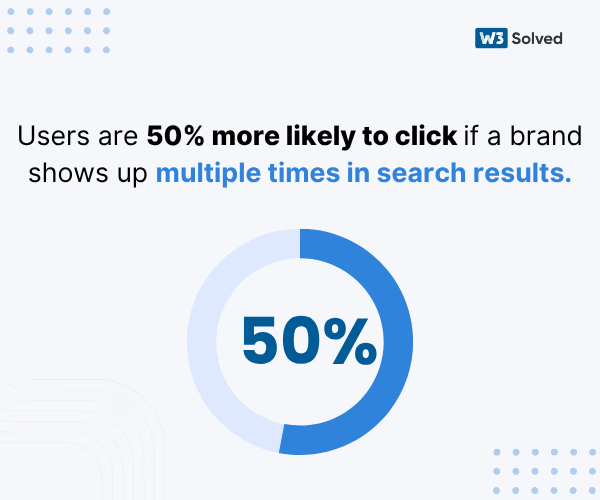
About 50% of users are more inclined to click on a brand result if that brand appears multiple times in the SERP.
7. Know Your Metrics
Before you spend a dollar, make sure you’re set up to track what actually matters. Without clear data, you’re flying blind and that’s how budgets get wasted fast.
Key metrics to monitor from the start:
- Conversions (sales, add to cart)
- ROAS (return on ad spend)
- Bounce rate (landing page issues)
- CTR (click-through rate to evaluate ad copy)
So before launching your PPC campaign, make sure you’re tracking the right metrics because the only way to get the results you want is to measure what matters.
8. Leverage Organic + Community Channels
PPC is powerful, but even better when paired with community trust. If people only see you when you’re selling, you’re forgettable. But when they notice you showing up in communities they trust, they start paying attention even before your ad hits their feed.
That’s when your brand starts working before the click.
- Build organic reach on TikTok, Instagram, or Reddit.
- Join relevant groups to listen and contribute (without spamming).
- Use these channels to inform your paid ad strategy.
How to Run a Successful PPC Campaign (Step-by-Step)
Once you’ve planned your strategy and chosen the right platform, it’s time to launch. Here’s a step-by-step walkthrough for setting up and managing a profitable PPC campaign for your E-Commerce store.
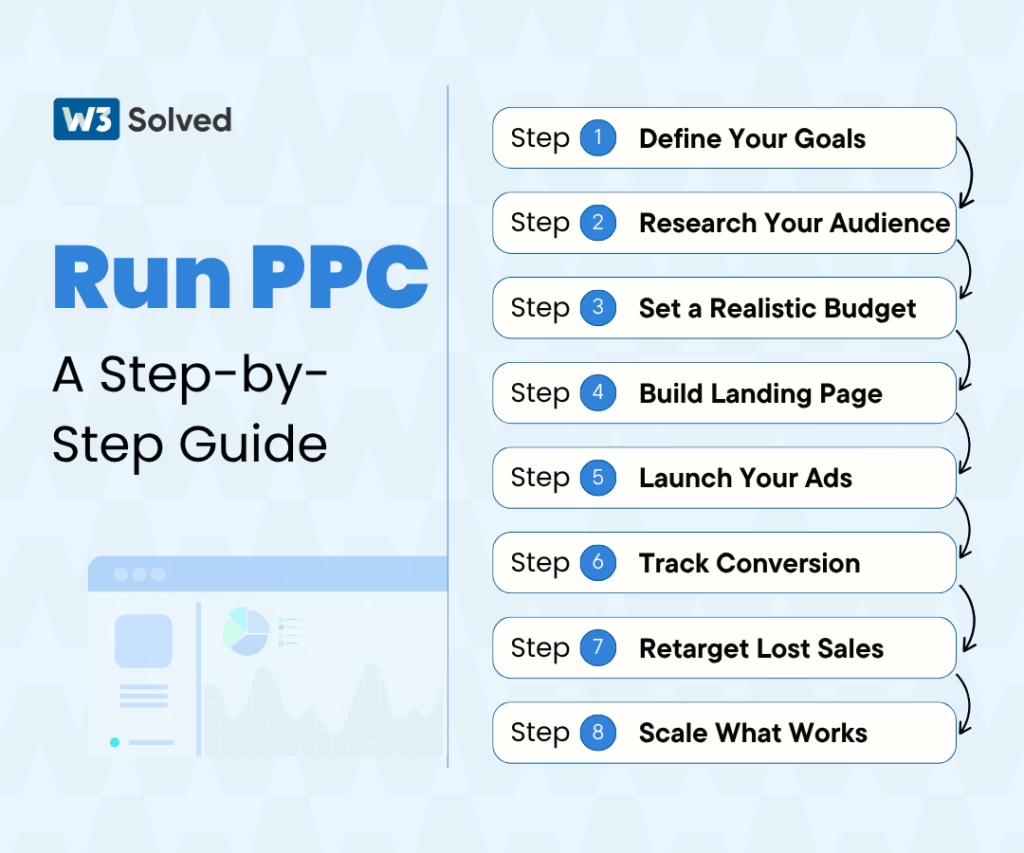
Step:1- Define Your Goals
Before launching any PPC campaign, it’s essential to know exactly what you want to achieve.
For Ecommerce, your primary goal is often sales, but depending on your business stage or product type, you might also focus on:
- Increase Sales
- Get Leads
- Drive Traffic
- Retarget Visitors
You should also define your key performance indicators (KPIs) upfront.
The clearer your goal, the better your ad structure, targeting, and budget decisions will be. It also helps you know what success looks like.
Step: 2- Research Your Audience
It is important to understand who your ideal customers are and how they behave online.
This insight helps you tailor your messaging, choose the right platforms, and target people more likely to convert.
- Demographics
- Behavior
- Platform Preference
Use research tools to guide every part of your campaign as,
- Google Keyword Planner – Understand what terms your audience is searching for.
- Facebook Audience Insights – Discover interests, behaviors, and demographics
- TikTok Creative Center – Spot content trends and audience engagement patterns
They help you choose the right keywords, focus on the most profitable ad platforms, and craft ad copy that connects instantly with your audience. This approach ensures your budget is spent where it delivers the highest return.
Step: 3- Set a Realistic Budget
Your PPC budget can disappear quickly if you’re not careful. Just because you’re spending doesn’t mean you’ll see results right away.
That’s why it’s smart to start small and treat the first few weeks as a learning phase.
Here’s what that looks like in action:
- Start with $10–$30/day per platform to test what works
- Put more budget toward bottom-of-funnel ads, like Shopping.
- Once you see profitable results (ROAS), increase your spend gradually
- Never “set and forget.” Check your performance daily, tweak what’s not working, and keep optimizing.
Step: 4- Build High-Converting Landing Pages
You can get clicks from your PPC campaign. However, if your landing page doesn’t convince people to take the next step, you’re just paying for visitors who leave.
- Make sure the product, price, and CTA are obvious right away
- Keep your website mobile optimized and fast loading
- Add real reviews, trust badges, or a simple guarantee
- Use clean visuals and skip anything that clutters the page
- Make checkout smooth, not frustrating
A great landing page does more than just support your ads. It helps turn traffic into customers and keeps your cost per conversion down.
Step: 5- Create and Launch Your Ads
Now it’s time to go live. But before you do, make sure your ad creative aligns with where your audience is in the buying journey and the platform they’re using.
Each platform attracts users at different stages, so your ads need to speak to the right intent.
Here’s how to tailor your creative by funnel stage and platform:
-
TikTok = Top/mid funnel
These users are discovering, not searching. Use casual, storytelling-driven short videos with strong hooks in the first 3 seconds to grab attention. Keep it native and authentic. -
Meta (Facebook/Instagram) = Mid-funnel
People are still researching or comparing. Use bold visuals, benefit-driven copy, and trust-builders like testimonials or reviews to guide decision-making. -
Google = Bottom-funnel
Users are ready to buy. Focus on price, benefits, and keywords. Use clear product titles and highlight key selling points directly in the ad copy.
Pro Tip: On TikTok and Instagram, video consistently outperforms static images. Using tools to create videos helps build trust and connection faster.
Helpful creative tips for any platform:
- Add urgency with phrases like “Only a Few Left” or “Limited Time Offer”
- Use dynamic product ads to retarget browsers who didn’t convert
- Highlight what sets you apart: free shipping, clean ingredients, local sourcing, etc.
You don’t need perfect ads on day one . Just ones that clearly speak to your audience, match the platform’s vibe, and give people a reason to click.
Step: 6- Install Conversion Tracking
Never run a PPC campaign without tracking. If you can’t measure what happens after someone clicks, you’re guessing and that’s a fast way to burn your budget.
Conversion tracking tells you exactly what’s working and where to improve.
Set up the right tools depending on the platform you’re using:
What to track:
- Purchases – Your main goal: Did they buy?
- Add-to-Cart – Helps spot drop-off before checkout.
- Page Views – Measure interest and funnel entry points.
- Initiate Checkout – Identifies cart abandonment patterns.
- ROAS (Return on Ad Spend) – Shows if your campaign is profitable.
Conversion tracking shows you what actually drives results, not just clicks. You’ll see which ads, audiences, and platforms are bringing in real sales, so you can double down on what works and cut what doesn’t.
Platforms like Google and Meta also rely on this data to optimize your campaigns automatically through machine learning.
Without proper tracking, you’re left guessing, unable to scale or troubleshoot effectively. It’s the difference between smart marketing and blind spending.
Step: 7- Monitor, Test, and Optimize
Once your campaign is live, don’t just let it run untouched. Within 3 to 7 days, start reviewing performance and making smart adjustments. This is where good campaigns become great.
Here’s what to focus on:
- Pause ads that aren’t performing to avoid wasting budget
- Check your search terms and exclude anything irrelevant
- Run A/B tests, try different images, videos, headlines, and copy lengths
- Raise bids on high-performing campaigns to maximize returns
- Lower or pause spend on campaigns with poor ROAS
Optimization is ongoing. Small tweaks, made consistently, often lead to the biggest improvements in results.
Step: 8- Use Retargeting
Most people won’t buy the first time they visit your site and that’s normal. Retargeting gives you a second chance to win them over by staying visible after they’ve left.
Here’s how to do it right:
- Run retargeting ads for users who added to cart but didn’t complete checkout
- Create time-based audiences (3-day, 7-day, 14-day) to match user intent and urgency
- Show product reminders, limited-time discounts, or free shipping offers to bring them back
These warm audiences already know your brand, so the cost to convert them is usually lower.
Step: 9- Scale What Works
When your campaign starts making profit, it’s time to grow but do it carefully. Increase your budget gradually.
Scaling thoughtfully helps you keep results consistent and avoid sudden drops in performance.
- Gradually increase budget (10–20% every few days)
- Expand audience reach (lookalikes, interest expansion)
- Add new platforms to scale traffic
It’ll help you make smarter decisions and train your team later.
Running PPC for Ecommerce isn’t just about turning ads on and watching orders roll in. It’s about building a system. One that brings the right traffic, delivers a great experience, and turns clicks into conversions without draining your budget.
From platform choice and campaign type to landing pages and retargeting, every piece plays a role.
When done right, PPC is not just profitable but also it’s scalable, measurable, and a real growth engine for your store.
Whether you’re starting from scratch or trying to fix what’s not working, treat PPC as an investment, not a gamble. Start small, test quickly, double down on what works, and keep improving. visibility alone doesn’t win. Conversion does.