The rules of search engine optimization changed dramatically in 2025. Google's AI Overviews now appear in over 30% of searches, and when they do, organic click-through rates have plummeted by 61%. For digital marketing agencies still optimizing for traditional rankings, this represents an existential crisis. We stopped chasing AI Overview rankings months ago. Here's why that was the right decision, and what we're doing instead that actually drives results for our clients. Understanding these AI marketing shifts is no longer optional.
In This Article
The Traffic Collapse Nobody Saw Coming
Between June 2024 and September 2025, we watched organic traffic patterns shift in ways that defied every prediction. According to research from Bain & Company, about 60% of searches now end without the user progressing to another destination site, with 80% of consumers relying on zero-click results at least 40% of the time. This represents a fundamental shift in search behavior.
Paid search didn't escape either. The entire search ecosystem fundamentally shifted, and most agencies were caught completely unprepared.
Publishers Hit Hardest
News publishers experienced the most dramatic declines. According to Wikipedia's documentation on zero-click results, this has raised significant concerns among online publishers as dwindling website traffic can lead to decreased revenue for advertising-supported publications. The editor-in-chief of The Verge coined the phrase "Google Zero" to refer to when Google stops providing click traffic.
Major media outlets saw catastrophic losses. This isn't small fluctuations in algorithm updates. This is a fundamental restructuring of how information flows on the internet.
The Numbers That Changed Our Strategy
When behavioral data was tracked across thousands of Google searches, the results confirmed what traffic numbers suggested. Only 8% of users who encountered an AI Overview clicked on a traditional search result, compared to 15% when no AI summary appeared. More importantly, 26% of searches with AI Overviews ended with no clicks at all.
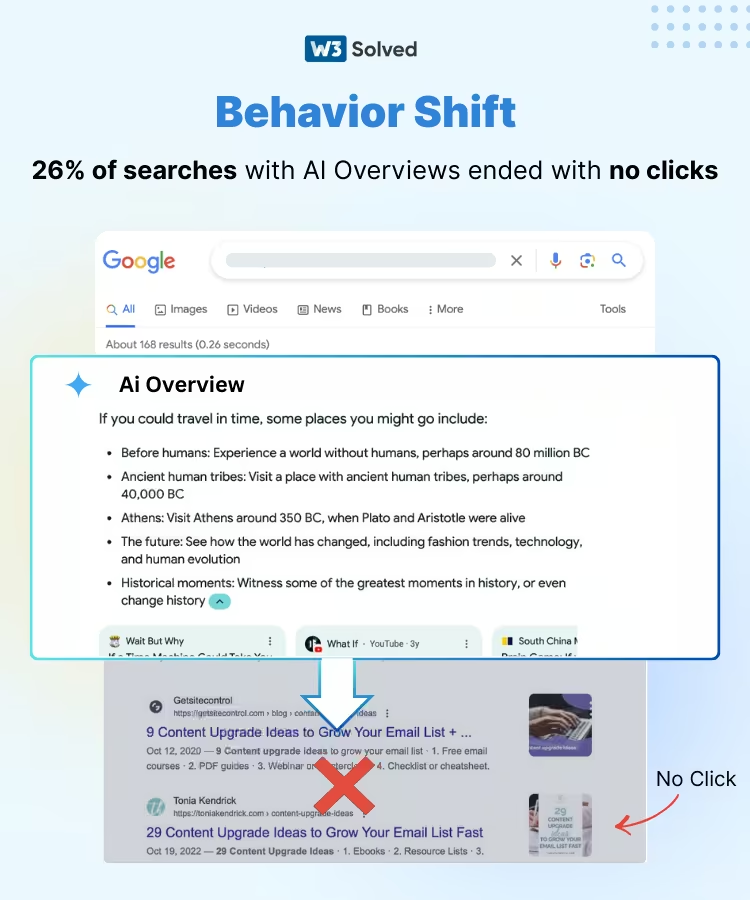
Less than 1% of users clicked on links within the AI Overview itself. The message was clear: users are getting their answers directly from Google without ever visiting websites. Zero-click searches increased from 56% in 2024 to 69% by May 2025. For content-driven businesses, this trend represents an existential threat.
Reality Check: Organic traffic to news websites plummeted from a peak of 2.3 billion monthly visits in mid-2024 to under 1.7 billion by May 2025. That's a loss exceeding 600 million monthly visits in less than one year, a 26% sectoral decline threatening the financial viability of journalism.
Why AI Overviews Changed Everything?
AI Overviews didn't just reduce clicks. They fundamentally changed user behavior and search intent satisfaction. When Google provides a comprehensive answer directly in search results, users no longer need to visit multiple websites to compare information or find basic facts.
Informational Queries Destroyed
Research analyzing over 10 million keywords found that 88.1% of queries triggering AI Overviews are informational in nature. This concentration on informational queries has devastating implications for educational content, news publishers, and how-to guides. These are precisely the content types that have traditionally driven the most organic traffic.
Between January and March 2025, AI Overview appearances more than doubled, jumping from 6.49% to 13.14% of queries. Certain categories experienced explosive growth. Entertainment queries saw a 528% increase in AI Overview presence. Health websites now face AI Overviews on 43-90% of medical keywords.
The Citation Paradox
Perhaps the most striking evidence comes from major reference sources. Despite being the most cited source with over 1.1 million mentions in AI Overviews, some authoritative websites experienced an 8% decline in human pageviews comparing 2025 to 2024. This decline was attributed to AI systems providing answers directly rather than linking to sources.
If the internet's most authoritative reference sources can't benefit from being cited in AI Overviews, what hope do commercial websites have?
Why Traditional Ranking Strategies Failed?
- Users get answers without clicking through to websites
- 88% of AI Overview queries are informational, destroying how-to and educational content traffic
- Even being cited in AI Overviews doesn't guarantee traffic growth
- Zero-click searches increased from 56% to 69% in one year
- The shift affects all content types, from news to e-commerce
- Traditional metrics like rankings and traffic no longer predict success
Our New Citation-focused Strategy
We stopped chasing traditional rankings because the data showed a different path forward. While overall traffic collapsed, brands cited in AI Overviews saw dramatically different outcomes. Sites cited in AI Overviews earned 35% higher organic CTR and 91% higher paid CTR compared to non-cited sites on the same queries.
This single insight changed our entire approach. Instead of optimizing for position one in traditional results, we now optimize for citation in AI Overviews. The difference is significant. Getting cited requires different strategies than ranking in traditional search.
How Citation Optimization Works?
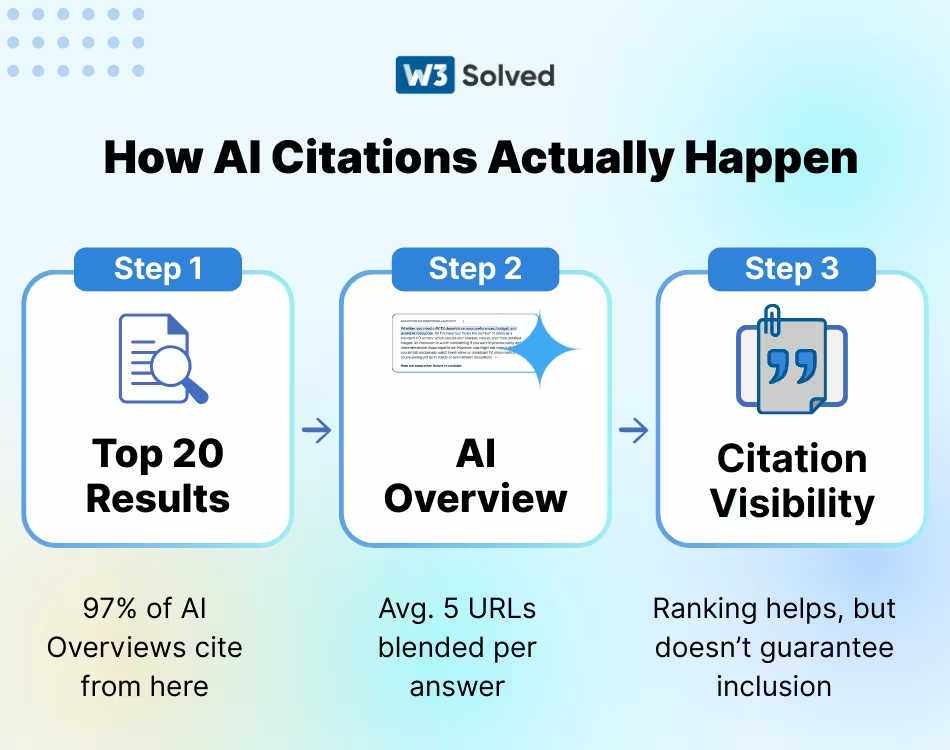
Our analysis of 432,000 keywords found that 97% of AI Overviews cite at least one source from the top 20 organic results. On average, each AI Overview includes five URLs from these top results, often blending insights from multiple high-performing pages. While higher rankings strongly correlate with inclusion, ranking well is a signal, not a guarantee.
We build content specifically designed for AI citation. This means structured, semantic content with question-based subheadings, concise answers, and clear authoritativeness signals. We shift from traditional link-building to mention-building, focusing on getting featured in trusted sources where AI systems gather information.
Measuring What Actually Matters
Traditional SEO metrics are dying. We've updated our KPIs to account for AI inclusion rather than just organic sessions from Google. We track visibility in AI responses, citation frequency, and share of voice in AI-generated answers across multiple platforms. AI visibility tracking tools have become essential for measuring success in this new landscape.
We found that one AI citation can generate more qualified traffic than ranking number three for the same query in traditional results. For clients in banking and financial services, we've seen smaller brands achieve disproportionate representation in AI answers, gaining consideration where traditional advertising struggled.
Our Citation-Focused Optimization Checklist:
- Create structured content with clear, concise answers to specific questions
- Use question-based subheadings that match natural language queries
- Build authority through mentions in Wikipedia, Reddit, and trusted publishers
- Establish consistent brand phrasing across all web properties
- Focus on expertise, authoritativeness, and trustworthiness signals
- Distribute content on platforms where AI systems source information
- Track citation frequency across multiple AI platforms, not just Google
- Measure share of voice in AI responses for key topics
What Actually Works Now?
The marketers thriving in 2025 stopped optimizing for rankings and traffic. They optimize for trust, citation, and share of voice. They measure visibility in AI responses, track competitor mentions, and create content that educates rather than just attracts.
Multi-Platform Visibility
We diversify beyond Google. While ChatGPT referrals to publisher websites remain small at 0.02% of total referral traffic, most publishers plan to put more effort into distribution and engagement on AI platforms. YouTube emerged as the platform where most publishers plan to invest extra effort in 2026, with publishers increasingly encouraging staff to behave more like creators.
We build direct relationships with audiences through email lists, communities, and platforms we control. The era of depending entirely on search engine traffic is over. Successful agencies build multiple traffic sources and own their audience relationships.
Content That Can't Be Summarized
We create content AI can't easily summarize. Original investigations, on-the-ground reporting, contextual analysis, and proprietary research all resist commoditization. When content provides unique value that can't be replicated by AI synthesis, it maintains traffic even in the AI Overview era.
For e-commerce clients, we focus on branded searches and local service businesses, which prove more resilient because users ultimately need to visit sites to make purchases or contact providers directly. Certain query categories saw less impact from AI Overviews, and we've adjusted client portfolios accordingly.
The Long-Term Reality
Industry surveys indicate publishers expect traffic to decline by 43% on average over the next three years, with around one-fifth of respondents expecting losses exceeding 75%. Most publishers now expect to put less effort into traditional Google search in 2026.
This isn't a temporary algorithm update that will revert. This is Google's transformation from a search engine directing traffic to external sources into an answer engine satisfying intent directly. The evolution benefits Google financially by extending user session duration and increasing ad exposure while simultaneously eroding the value proposition of content creators.
What's Working for Our Clients in 2025?
- Optimizing for AI citation rather than traditional rankings
- Building multi-platform presence beyond Google search
- Creating proprietary content that resists AI summarization
- Developing direct audience relationships through owned channels
- Focusing on branded and transactional queries with higher resilience
- Measuring share of voice in AI responses across platforms
Here Is What We Think:
The time of "rank and bank" is over. Only websites that adapt to citation-based visibility, multi-platform distribution, and owned audience relationships will survive. Traditional SEO metrics like rankings and organic traffic no longer tell the whole story of search success.
We stopped chasing AI Overview rankings because the game fundamentally changed. Instead of competing for position one in organic results, we now compete for authority in AI systems. Instead of optimizing for clicks, we optimize for citations. Instead of measuring traffic, we measure share of voice.
The agencies that win in this new environment are those that recognized earliest that the old playbook is obsolete. Google processes over 13 billion searches per day in 2025 but those searches don't bring as many people to websites. The question isn't how to rank in AI Overviews. The question is how to build sustainable visibility when most searches never result in clicks.
For our agency and our clients, the answer lies in citation, authority, and multi-platform presence. The sooner the industry accepts this reality, the sooner we can all adapt our strategies for long-term success.