The roofing industry has a problem. Contractors spend thousands on platforms like HomeAdvisor and Thumbtack, only to compete with five other roofers for the same homeowner. The result? Lower margins, rushed estimates, and a constant battle to stand out.
Smart roofing businesses are walking away from this model. Instead, they build systems that bring customers directly to them. This guide shows you how to create those systems.
Why Lead Aggregators Hurt Your Bottom Line?
When you buy leads from third-party platforms, you face three major issues:
- High competition: Every lead gets sold to multiple contractors. You win jobs by lowering prices, not providing better service.
- Low quality: Many leads come from people who are not ready to hire. They submitted a form to get rough estimates or are months away from making a decision.
- No ownership: The platform owns the relationship. When you stop paying, the leads stop coming. You build their business, not yours.
Compare this to generating your own leads. You control the process, keep 100% of customer relationships, and build long-term value in your brand.
#Strategy 1: Dominate Local Search Results
When a homeowner needs roof repairs, they open Google and search for contractors nearby. Your goal is to show up first.
Local SEO puts your business in front of people who already want to hire someone. Unlike paid leads where you compete on price, organic search positions you as the obvious choice in your service area.
Optimize Your Google Business Profile
Your Google Business Profile appears in the map pack above regular search results. Set it up correctly:
- Complete every section: Add your business name, address, phone number, hours, services, and service areas. Google favors complete profiles over partial ones.
- Post regular updates: Share photos of completed projects, seasonal maintenance tips, and special offers. Fresh content signals that your business is active.
- Respond to every review: Thank customers for positive feedback and address concerns in negative reviews. Your responses show potential customers how you handle problems.
- Use local keywords in your business description: Instead of "We are a roofing company," write "Residential and commercial roofing contractor serving [City Name] and surrounding communities since [Year]."
Build Location-Specific Service Pages
Create dedicated pages for each city or neighborhood you serve. A single “Service Areas” page with a list of cities will not rank well. Search engines prefer pages that provide real value to users in specific locations.
Each location page should include:
- Services available in that area
- Information about local weather conditions and how they affect roofs
- Photos of projects completed nearby
- Customer testimonials from that location
- Local business license information
This approach helps you rank for searches like “roof replacement [City Name]” and “roofing contractor near [Neighborhood].”
Get Listed in Local Directories
Consistent business information across the web improves your local search rankings. Submit your business to:
- Better Business Bureau
- Chamber of Commerce
- Yelp
- Angi (for reviews, not leads)
- Local home improvement directories
- Industry associations
Make sure your name, address, and phone number match exactly on every listing. Even small differences can confuse search engines and hurt your rankings.
#Strategy 2: Use Paid Ads to Capture High-Intent Searches
Organic search takes time to build. Paid advertising delivers results immediately by placing your business at the top of search results.
The key is targeting people who are ready to hire, not just browsing.
Google Local Services Ads
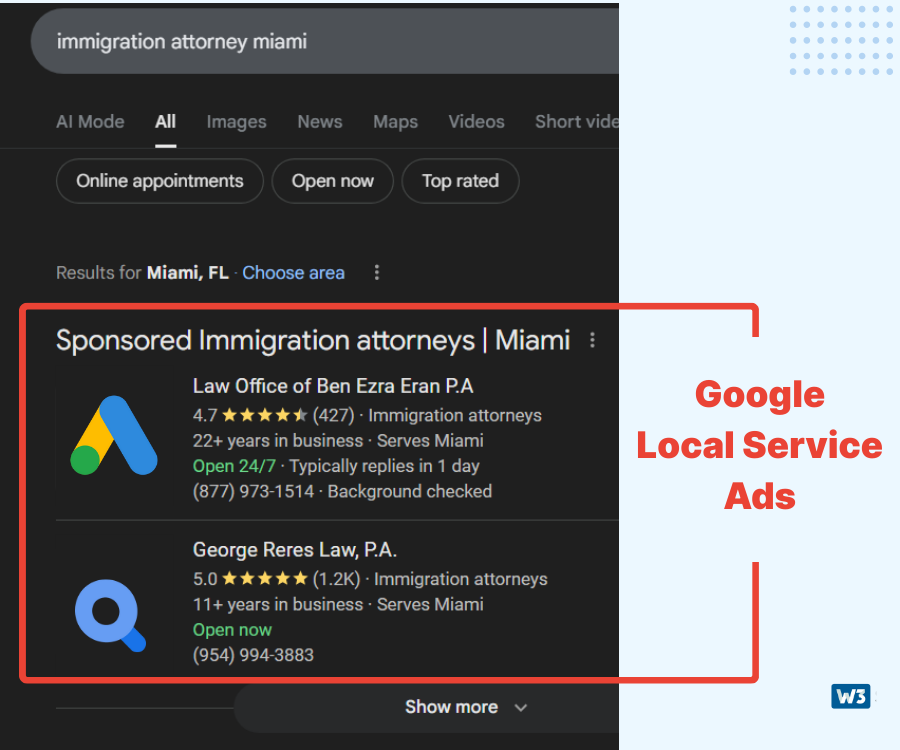
These ads appear above regular search ads and display your business with a Google Guaranteed badge. Homeowners can call you directly from the ad without visiting your website.
You only pay when someone contacts you through the ad. This makes Google Local Services Ads one of the most cost-effective options for roofing contractors.
Requirements:
- Pass a background check
- Maintain proper licensing and insurance
- Keep your customer reviews above a minimum threshold
Google Search Ads
Standard search ads let you target specific keywords and control your budget more precisely than Local Services Ads.
Focus on keywords that indicate immediate need:
- "Emergency roof repair [city]"
- "Roof leak repair near me"
- "Storm damage roofing contractor"
- "Replace roof [city]"
Avoid broad keywords like “roofing” or “roof.” These attract people who are researching, not hiring.
Write ad copy that addresses the homeowner’s concern directly. Instead of “Best Roofing Company,” use “Fix Your Leaking Roof Today” or “Storm Damage? We Work With Your Insurance.”
Facebook and Instagram Ads
Social media ads work differently than search ads. People on Facebook are not actively looking for a roofer. Your ads need to create awareness and interest.
Use these strategies:
- Target homeowners in your service area: Facebook lets you narrow your audience by location, homeownership status, home value, and age of home.
- Show before-and-after photos: Visual proof of your work stops people from scrolling past your ad.
- Offer something valuable: A free roof inspection or downloadable guide on "5 Signs Your Roof Needs Replacement" gives people a reason to click.
- Run retargeting campaigns: Show ads to people who visited your website but did not contact you. Sometimes people need to see your business multiple times before they are ready to hire.
#Strategy 3: Create Content That Answers Customer Questions
Most roofing companies focus on what they do. Smart companies also focus on what their customers need to know.
When you answer common questions through blog posts, videos, and guides, you accomplish three goals:
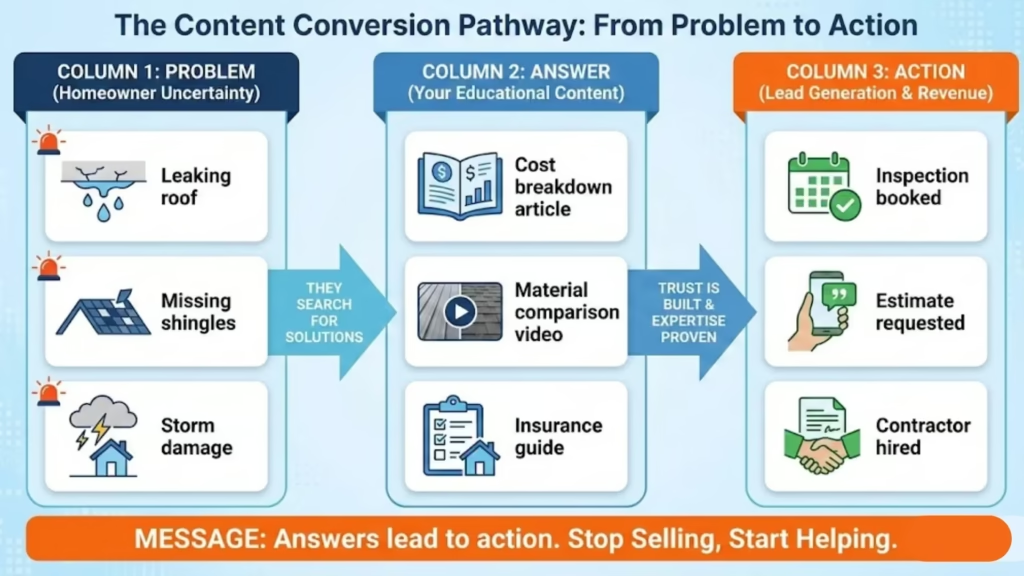
- You rank for more keywords: Every piece of content targets different search terms and brings new visitors to your site.
- You build trust:Helpful content positions you as an expert who educates customers, not just someone trying to make a sale.
- You stay top-of-mind: When the homeowner is ready to hire, they remember the company that helped them understand their options.
- Run retargeting campaigns: Show ads to people who visited your website but did not contact you. Sometimes people need to see your business multiple times before they are ready to hire.
Topics That Generate Leads
Write about problems your customers face:
- "How Long Should a Roof Last? Lifespan by Material Type"
- "What Does Roof Replacement Cost in [City]?"
- "Asphalt Shingles vs. Metal Roofing: Which Is Right for Your Home?"
- "How to File a Roof Insurance Claim After Storm Damage"
- "Warning Signs Your Roof Needs Immediate Repair"
Each article should be 1,500 to 2,500 words and include:
- Clear answers to the question in the title
- Photos or diagrams that illustrate key points
- A section explaining when to hire a professional
- A call-to-action offering a free inspection or estimate
Video Content Builds Trust Faster
Video lets homeowners see your team, your process, and your results before they contact you. This reduces hesitation and increases conversion rates.
Create videos showing:
- Time-lapse footage of roof installations
- Explanations of different roofing materials
- What happens during a roof inspection
- How to identify common problems like missing shingles or damaged flashing
Post videos on your website, YouTube, and social media. Optimize YouTube videos with local keywords in the title and description to help them rank in search results.
Downloadable Guides Generate Contact Information
Offer a detailed PDF guide in exchange for an email address. This gives you permission to follow up with potential customers who are not ready to hire immediately.
Good guide topics:
- "Homeowner's Guide to Roof Replacement: What to Expect, Timeline, and Budget"
- "Storm Damage Checklist: How to Document and File Your Claim"
- "Roof Maintenance Calendar: Seasonal Tasks to Extend Your Roof's Life"
Once someone downloads your guide, send them a series of emails over the next few weeks with additional tips, customer stories, and special offers. Many homeowners take weeks or months to make a hiring decision. Email keeps you in the conversation.
#Strategy 4: Turn Reviews Into Your Best Marketing Asset
Online reviews influence buying decisions more than any advertisement. The right review strategy turns satisfied customers into a lead generation channel.
Make It Easy to Leave Reviews
Most happy customers will leave a review if you ask. The problem is remembering to ask and making the process simple.
Send a follow-up message within 48 hours of completing a job:
“Hi [Customer Name], we finished your roof yesterday and want to make sure everything meets your expectations. If you are happy with our work, would you mind sharing your experience on Google? Here’s a direct link: [Review URL]”
The link should take them directly to the review form, not your general business listing. This removes friction and increases completion rates.
Respond to Every Review
Potential customers read your responses as carefully as the reviews themselves. Your replies show how you handle both praise and criticism.
For positive reviews:
- Thank the customer by name
- Mention specific details from their project
- Invite them to contact you for future needs
For negative reviews:
- Acknowledge their concern without making excuses
- Explain how you plan to resolve the issue
- Take the conversation offline to discuss specifics
Never argue with a reviewer, even if they are wrong. Future customers will judge your professionalism by how you respond.
Feature Reviews on Your Website
Do not bury testimonials on a single “Reviews” page. Place customer quotes throughout your site:
- Homepage
- Service pages
- Contact page
- Location pages
Include the customer’s full name, city, and a photo if they permit. Specific details make reviews more credible.
Use Reviews in Your Advertising
Facebook and Google ads perform better when they include social proof. Create ads featuring:
- A five-star review as the headline
- Before-and-after photos from that customer's project
- A quote about the specific service they received
This approach works because it shows real results, not marketing claims.
#Strategy 5: Set Up Systems That Convert Leads Into Jobs
Generating leads means nothing if they do not turn into paying customers. Most roofing companies lose leads because they lack follow-up systems.
Answer the Phone
It sounds obvious, but missed calls are the number one reason roofing companies lose business. When a homeowner calls three contractors and two do not answer, the third one wins by default.
Options if you cannot always answer:
- Hire a virtual receptionist: Services like Ruby or Smith.ai answer calls in your company name, take messages, and schedule appointments.
- Use call tracking software: These tools send text notifications when someone calls, so you can return missed calls within minutes.
- Set up voicemail that sets expectations: Tell callers when you will call back and give them alternative ways to reach you, like a contact form or email.
Respond to Online Leads Immediately
Speed matters. Research shows that businesses that respond to leads within five minutes are 100 times more likely to convert them than businesses that wait an hour.
Set up automatic email responses:
“Thanks for contacting [Company Name]! We received your request for [service] and will call you within the next hour to discuss your project. In the meantime, you can reach us directly at [phone number].”
Then actually call within that timeframe. If you cannot reach them, try again in a few hours and send a follow-up email.
Use a CRM to Track Every Lead
A customer relationship management system prevents leads from falling through the cracks. Even a simple CRM like Google Sheets or a dedicated platform like HubSpot or Salesforce helps you:
- See which leads need follow-up
- Track what stage each lead is in your sales process
- Set reminders to call leads back
- Store notes from previous conversations
- Measure which marketing channels bring the best leads
When you track every lead, you can identify patterns. Maybe Facebook ads bring more inquiries but Google ads bring customers who hire faster. That data helps you invest your marketing budget more effectively.
Create Email Sequences for Leads Not Ready to Buy
Some homeowners are planning months ahead. Others are getting multiple quotes before deciding. An email sequence keeps your business in their minds without requiring manual follow-up.
A simple five-email sequence:
Day 1: Thank them for their inquiry and provide the estimate or information they requested.
Day 3: Share a blog post or video about their type of project.
Day 7: Send customer testimonials from similar projects in their area.
Day 14: Offer to answer any questions or schedule a follow-up inspection.
Day 21: Provide a limited-time incentive to book, like a discount on an upgrade or priority scheduling.
This keeps you visible without being pushy. When they are ready to hire, your name is the first one they remember.
How to Measure What Works?
Marketing without measurement wastes money. Track these metrics to understand which strategies generate the best return:
Website traffic. How many people visit your site each month? Which pages do they view? Where do they come from (search, social media, ads)?
Lead volume by source. How many leads come from organic search, paid ads, social media, and referrals? Which sources convert to jobs at the highest rate?
Cost per lead. How much do you spend on marketing for each lead generated? Compare this to the average job value to ensure profitability.
Conversion rate. What percentage of leads turn into paying customers? If you get 100 leads but only book five jobs, you need to improve your sales process, not generate more leads.
Customer lifetime value. How much is a customer worth over time, including repeat business and referrals? This number helps you determine how much you can afford to spend acquiring new customers.
Use Google Analytics for website data, call tracking for phone leads, and your CRM for overall lead management. Review these numbers monthly and adjust your strategy based on what the data shows.
Common Mistakes That Waste Your Marketing Budget
Trying to rank for keywords outside your service area. If you only work in three counties, do not create content targeting the entire state. Focus on locations you actually serve.
Running ads without clear goals. Define success before you start. Are you trying to generate phone calls, form submissions, or email signups? Each goal requires different ad strategies.
Neglecting mobile users. Over 60% of local searches happen on mobile devices. If your website is hard to use on a phone, you lose half your potential leads.
Using generic stock photos. Homeowners want to see your actual work, not images from a photo library. Real project photos build more trust.
Ignoring negative reviews. Deleting bad reviews is impossible. Responding to them professionally shows you care about customer satisfaction.
Giving up too soon. SEO takes three to six months to show results. Paid ads work faster but need optimization over time. Most roofing companies quit before they see success.
Why W3 Solved Helps Roofing Companies Win?
At W3 Solved, we build lead generation systems that put you in control. Instead of competing with other contractors on lead platforms, we help you create a steady stream of customers who choose your business first.
Our roofing marketing services include:
- Local SEO to dominate search results in your service area
- Google Ads management focused on high-intent keywords
- Website design optimized for mobile users and lead conversion
- Content creation that answers customer questions and builds trust
- Review management systems that turn satisfied customers into marketing assets
We work with roofing contractors who want predictable growth, not just occasional leads. Our strategies focus on long-term value, not quick fixes that stop working when you pause spending.
Ready to stop paying lead aggregators and start building your own lead generation system?
Contact W3 Solved today for a free marketing audit.
We’ll analyze your current online presence and show you exactly how to generate more qualified leads for your business.
Frequently Asked Questions
Most roofing companies start seeing traffic increases within three to four months. Significant lead generation typically happens around the six-month mark. SEO is a long-term strategy that builds momentum over time.
If you need leads immediately, start with Google Ads or Local Services Ads. They deliver results within days. At the same time, begin building your SEO foundation so you can eventually reduce ad spending.
Industry standards suggest 5-10% of revenue for established companies and 10-15% for businesses trying to grow quickly. Track your cost per lead and customer lifetime value to determine what works for your specific situation.
Yes, but they require a different approach than search ads. Social media works best for building awareness and capturing leads who are planning ahead, not emergency repairs. Use them to complement search-based strategies.
Focus on local content and community engagement. Large companies struggle to compete on genuine local expertise. Create content specific to your neighborhoods, get involved in community events, and build authentic relationships that big corporations cannot replicate.
Negative reviews happen to every business. Respond professionally, acknowledge the concern, and explain how you addressed it. Potential customers care more about how you handle problems than whether problems ever occur.
Yes. Blog content helps you rank for more keywords, answer customer questions, and demonstrate expertise. Companies with active blogs generate more leads than those with static websites.
Track phone calls, form submissions, and job bookings from each marketing channel. Use call tracking software and Google Analytics to see which strategies generate the best results. Review your numbers monthly and adjust your approach based on data.