You invested thousands in a professional website.
Your SEO agency sends monthly reports showing traffic growth.
Visitors are coming to your site.
But the phone stays quiet. Consultation forms sit empty. New client intake remains flat.
This disconnect frustrates attorneys across every practice area. Research shows 75% of potential clients visit two to five law firm websites before contacting anyone. If they land on yours and leave without calling, you just lost a case you will never know about.
The average conversion rate for law firm websites sits at just 2.07%, meaning 98 out of every 100 visitors walk away without taking action.
The problem is not traffic. The problem is what happens after people arrive. This guide identifies the specific issues preventing your website from converting visitors into paying clients, with concrete fixes you can implement immediately.
What You'll Learn?
- Your Mobile Experience is Driving Clients Away
- Page Speed is Killing Your Conversion Rate
- Your Calls-to-Action Are Invisible or Confusing
- Missing Trust Signals Cost You Credible Cases
- Your Content Fails to Answer Critical Client Questions
- Slow Response Times Guarantee Lost Clients
- You're Invisible to AI Search Engines
- Frequently Asked Questions
Your Mobile Experience is Driving Clients Away
Mobile drives 7 times more traffic than desktop in the legal industry, representing the largest desktop-mobile traffic gap across all industries.
Yet research shows 69% of visitors abandon law firm websites that load slowly, with mobile performance being the primary culprit.
Think about when someone needs a lawyer. They are rarely sitting at a desk with a computer.
They just got injured. They received legal papers. They had an unpleasant interaction with police. They are stressed, probably using their phone, and need help immediately.
If your site forces them to pinch and zoom to read text, if buttons are too small to tap accurately, if the page takes longer than three seconds to load, they click back and try the next firm.
Research from Google's PageSpeed Insights documentation confirms that 53% of mobile users abandon legal websites requiring more than three seconds to load.
The Mobile Optimization Gap
Only 74% of law firms have mobile-friendly websites. That leaves more than one in four firms losing every single mobile visitor.
Even among firms claiming mobile optimization, many implement responsive design poorly with text that remains unreadable, forms that are impossible to complete on phones, and navigation that frustrates rather than guides.
Google switched to mobile-first indexing in 2018, meaning the search engine evaluates your mobile site as the primary version. If your mobile experience is poor, Google will not rank you well regardless of how good your desktop site looks.
You cannot fix ranking problems without first fixing mobile problems. Professional SEO services in Dublin and other markets prioritize mobile optimization as the foundation of any successful digital strategy.
Mobile Optimization Fixes That Drive Conversions
- Implement true responsive design: Your site must automatically adapt to any screen size without requiring zooming or horizontal scrolling. Test on actual phones, not just browser tools.
- Make phone numbers clickable: Use tel: links so mobile visitors can call with one tap. Position phone numbers prominently at the top of every page.
- Simplify navigation: Mobile menus should require no more than two taps to reach any page. Consider sticky navigation that follows users as they scroll.
- Optimize form fields: Mobile forms need large tap targets, appropriate input types, and minimal required fields. Every additional field reduces mobile conversion rates.
- Test actual loading speed: Use Google PageSpeed Insights to measure real mobile performance. Anything over three seconds is unacceptable.
Page Speed is Killing Your Conversion Rate
Every one-second delay in page load time reduces potential client conversions by approximately 7%. If your site takes five seconds to load instead of two, you are losing 21% of potential clients before they even see your content.
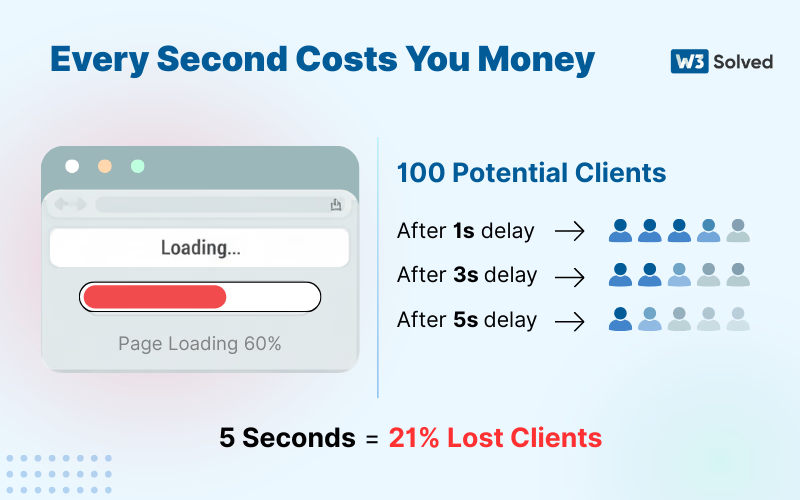
Page speed affects more than just user experience. Google uses Core Web Vitals as ranking signals. Slow sites rank lower, get less traffic, and convert fewer visitors who do arrive.
This creates a compounding problem where technical performance issues cascade into business results.
Common culprits include oversized images that load at full resolution when thumbnails would work, unoptimized code with render-blocking JavaScript, excessive plugins that each add loading time, and cheap hosting that cannot handle traffic spikes.
Speed Improvements That Actually Matter
Image optimization delivers the biggest impact for least effort. Most law firm websites load images at 5 to 10 times the necessary resolution. A hero image does not need to be 5MB when 200KB looks identical to visitors.
Use modern formats like WebP that compress better than JPEG. Google's image optimization guidelines provide detailed best practices for reducing file sizes without sacrificing quality.
Enable browser caching so repeat visitors do not reload everything. Implement lazy loading so images below the fold only load when visitors scroll down. Minimize HTTP requests by combining files where possible.
If your website runs on WordPress, clean out inactive plugins. Each plugin adds code that must execute on every page load. Audit what you actually use versus what sits dormant consuming resources.
Regular website maintenance ensures your site stays fast, secure, and optimized as plugins update and content expands over time.
Immediate Speed Optimization Actions
- Run Google PageSpeed Insights and implement the top three recommended fixes
- Compress all images using tools like TinyPNG or ShortPixel before uploading
- Enable a caching plugin if on WordPress (WP Rocket, W3 Total Cache, or similar)
- Review your hosting plan and upgrade if you are on shared hosting with high traffic
- Remove unnecessary plugins, tracking codes, and third-party scripts
Your Calls-to-Action Are Invisible or Confusing
Research shows law firm websites with clear, compelling calls-to-action achieve 161% higher conversion rates. Yet 38% of law firms lack clear CTAs, making it difficult for visitors to take the next step even when they want to hire you.
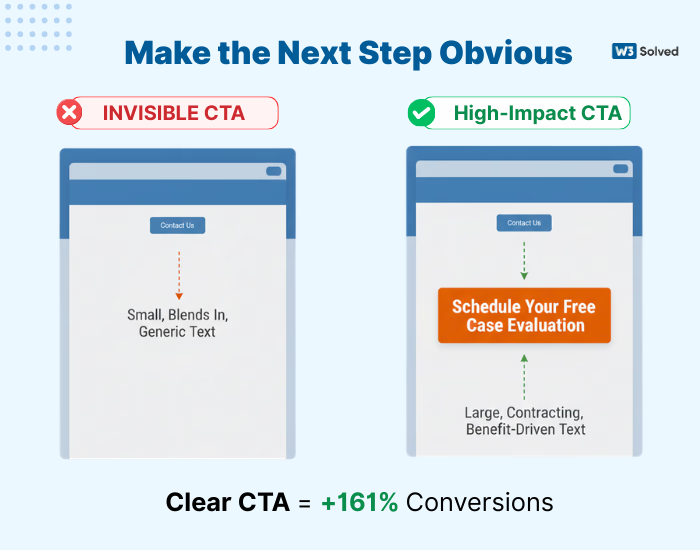
Visitors should never have to search for how to contact you. Every page needs obvious, prominent CTAs that tell people exactly what to do next.
"Contact Us" is vague. "Schedule Your Free Case Evaluation" is specific and action-oriented.
Research shows that CTA buttons with contrasting colors increase conversions significantly. According to CXL's analysis of button color studies, contrast matters more than the specific color chosen, with high-contrast buttons dramatically outperforming those that blend into page design.
The button should visually jump off the page through color contrast, size, and positioning.
Multiple Conversion Paths
Different clients prefer different contact methods. Research shows 46% of clients first contact law firms by phone, while 27% reach out by email. Some want to schedule consultations online. Others prefer chatting immediately.
Your site should offer at least three easy ways to convert: phone with click-to-call on mobile, contact form that is short and simple, and ideally online scheduling or chat. The more friction you remove, the more clients you capture.
This multi-channel conversion strategy applies to paid advertising as well. If you're running Google Ads, ensure your landing pages match the same conversion principles outlined in our 15-point PPC waste audit.
Position CTAs strategically throughout the page, not just at the bottom. Someone reading about your criminal defense practice should find consultation buttons in the header, within the content, and at the conclusion.
Multiple touchpoints catch people at different decision points.
High-Converting CTA Best Practices
- Use action-oriented language: Replace generic "Submit" or "Contact" with specific actions like "Get Your Free Consultation" or "Start My Case Review."
- Create visual contrast: CTAs should use colors that stand out from your brand palette. Red, orange, and green often outperform blues and grays.
- Position above the fold: Place primary CTAs where visitors see them immediately without scrolling, especially on mobile.
- Keep forms minimal: Every field you require reduces completion rates. Name, phone, email, and brief case description should be maximum.
- Add urgency when appropriate: "Limited free consultations available" or "Call within 24 hours for immediate help" can boost action rates.
Missing Trust Signals Cost You Credible Cases
Legal services involve high stakes and substantial costs. Potential clients need significant trust before contacting you.
Research shows 76% of people leave law firm websites that do not provide enough information about the firm.
Trust signals include attorney credentials, bar admissions, case results, client testimonials, professional association memberships, awards, and press mentions. These elements prove expertise and build confidence in your capabilities.
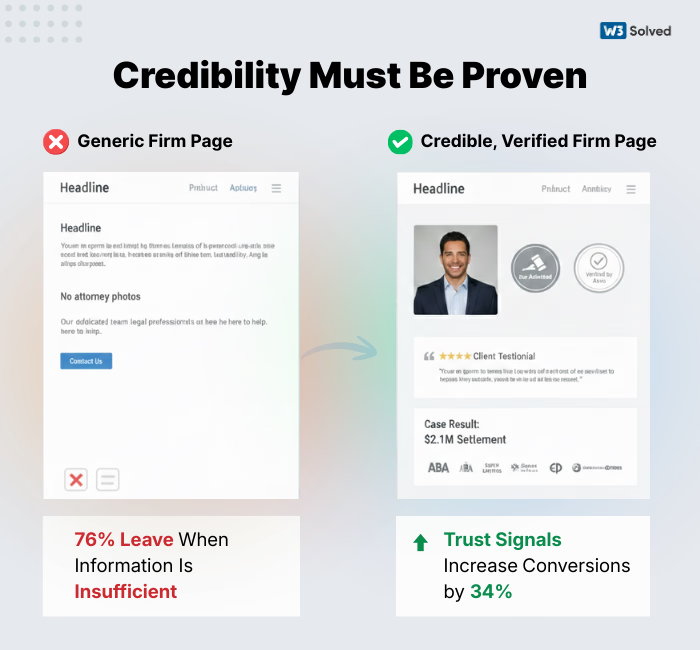
Incorporating client testimonials in lawyer landing pages increases conversion by 34%. Real reviews from actual clients carry more weight than any marketing copy you write about yourself.
Potential clients want to hear from people like them who hired you and got results.
Credential Display and E-E-A-T
Google's search quality guidelines emphasize Experience, Expertise, Authoritativeness, and Trustworthiness. For legal topics, this means attorney credentials must be prominently displayed and verifiable.
Learn more about Google's E-E-A-T quality guidelines for legal and YMYL (Your Money Your Life) content. Professional Fort Lauderdale SEO services implement these guidelines to build credibility for law firms and professional service providers.
Attorney bio pages need verified credentials, bar admissions, practice history, published articles, speaking engagements, and professional affiliations. Link to external publications, bar profiles, and court opinions to prove authenticity.
Case results demonstrate capability, but must comply with ethics rules about testimonials and guarantees. Focus on specific outcomes without making promises about future cases.
"Successfully defended client facing felony charges, resulting in complete dismissal" is factual. "We will get your charges dropped" violates ethics rules.
Ethics Compliance: All testimonials, case results, and attorney advertising must comply with your state bar's professional responsibility rules. Most jurisdictions require disclaimers on testimonials and prohibit guarantees about case outcomes. Review your state bar advertising guidelines before adding trust signals.
Your Content Fails to Answer Critical Client Questions
Law firms that blog regularly receive 97% more links to their websites and have 434% more indexed pages.
More importantly, comprehensive content that answers actual client questions positions you as the expert they want to hire.
Potential clients are researching before contacting you. They want to understand their legal situation, know what to expect, and evaluate whether you can help.
Generic attorney bios and vague service descriptions do not provide the information they need.
Content exceeding 2,000 words performs 10 times better in rankings than shorter pieces. This does not mean padding articles with fluff. It means comprehensively addressing topics visitors actually care about.
What Content Actually Converts?
Practice area pages should explain what the legal issue involves, common scenarios triggering it, what outcomes clients can expect, how your firm approaches these cases, and specific steps in the process.
Replace legal jargon with plain English explanations.
FAQ content addresses specific questions clients actually ask. "What should I do immediately after a car accident?" "How long do personal injury cases take?" "Can I get my criminal record expunged?"
Answer these questions thoroughly and you capture people searching for those exact answers.
Local content demonstrates community knowledge and targets location-based searches. Articles about local court procedures, jurisdiction-specific laws, and area legal issues help you rank for "lawyer near me" searches while showing expertise in your market.
This local SEO approach works across all industries. See how Colorado Springs SEO marketing leverages location-specific content to dominate local search results.
Content Strategy for Client Acquisition
- Create comprehensive practice area pages exceeding 1,500 words with clear explanations, process overviews, and multiple CTAs
- Build FAQ pages answering every common question potential clients ask during consultations
- Write location-specific content for each city or county you serve, addressing local legal procedures
- Develop case study content showing how you handled specific situations with proper disclaimers
- Update content quarterly to keep information current and demonstrate active expertise
Slow Response Times Guarantee Lost Clients
Research shows 42% of law firms take an average of three days to respond to potential clients. By that time, the prospect has already contacted other firms, scheduled consultations, and possibly retained someone else.
The legal sector sees about a 2.6% conversion rate for inbound calls. Among firms that respond within one hour, conversion rates more than double.
Speed matters because most people contact multiple attorneys. The first firm to respond professionally often wins the client.
Potential clients reach out when they need help, not when it is convenient for your office hours. Someone arrested Friday evening cannot wait until Monday morning for a response.
They will hire whichever attorney calls them back first.
Systems for Rapid Response
Automated acknowledgment emails confirm form submissions immediately and set expectations for when they will hear from you. "We received your message and will respond within two business hours" manages expectations while showing responsiveness.
Call tracking software routes calls to available attorneys immediately, not just during office hours. Services like CallRail, CallTrackingMetrics, or CallFire ensure you never miss potential client calls.
Live chat provides immediate engagement for website visitors. Someone researching attorneys at midnight can start a conversation, schedule a callback, or get basic questions answered.
Many chat services offer live operators during business hours and automated responses after hours.
Client intake software like MyCase, Clio, or similar platforms automatically capture lead information, send confirmation messages, and create follow-up tasks ensuring no inquiry falls through cracks.
Response Time Optimization
- Set up immediate auto-responses: Confirm receipt of all inquiries within seconds with expected response timeframes.
- Implement call forwarding: Route urgent calls to mobile phones so attorneys can respond outside office hours.
- Add live chat or chatbots: Provide instant engagement for website visitors, capturing leads even when staff is unavailable.
- Create response protocols: Establish systems ensuring someone responds to all inquiries within two hours during business days.
- Track response metrics: Monitor average response time and conversion rates by response speed to identify improvement opportunities.
You're Invisible to AI Search Engines
AI search engines like ChatGPT, Claude, Perplexity, and Google AI Overviews are fundamentally changing how potential clients discover attorneys.
Traditional SEO focused on keywords and links. In 2026, Generative Engine Optimization determines whether AI recommends your firm when people ask for legal help. Learn more about why focusing on AI citations matters more than chasing AI Overview rankings.
When someone asks ChatGPT "I need a personal injury lawyer in Phoenix, who should I contact?" the AI either cites your firm or does not. If you are invisible to AI search, you are missing an entire channel of client acquisition that continues growing rapidly.
Featured snippets now appear in 19% of all search queries. Web pages optimized to appear in featured snippets generate 2 times higher click-through rates than standard organic listings.
The same optimization that gets you into featured snippets makes AI engines more likely to cite you.
Making Your Firm Citation-Worthy
AI systems cite authoritative sources that provide clear, accurate answers. Generic marketing content about how you fight for clients does not get cited. Comprehensive legal guides explaining specific issues do.
Structure content with proper heading hierarchy using H1, H2, and H3 tags. Legal web pages with proper structure rank 38% higher in search results and get cited more frequently by AI.
Implement schema markup to help search engines and AI systems understand your content. Legal websites with structured data experience 20 to 30% improvements in click-through rates.
Learn how to implement Schema.org legal service markup on your website. Structured data implementation is crucial across industries, as shown by the 2026 Google Product ID update for retailers requiring proper schema markup.
Answer-first formatting puts the direct answer in the first paragraph, then provides supporting detail. This matches how people prompt AI tools and how AI extracts information for citations.
AI Optimization Strategy
- Rewrite practice area pages with answer-first formatting addressing specific legal questions
- Implement FAQ schema markup on all question-and-answer content
- Create comprehensive guides exceeding 2,000 words that AI systems recognize as authoritative
- Add LocalBusiness and Attorney schema to help AI understand your firm and practice areas
- Monitor whether AI engines cite your firm using tools like Ahrefs Brand Radar
Converting Your Website From Liability to Asset
Your website should be your most productive marketing channel, working around the clock to attract and convert potential clients.
When it fails to deliver results, you waste both the money invested in the site and the ongoing marketing driving traffic to it.
The fixes outlined here address the most common conversion killers in law firm websites. None require complete redesigns or massive budgets. Most can be implemented incrementally, testing improvements and measuring impact before moving to the next optimization.
Start with mobile optimization and page speed. These foundational elements affect every visitor and every other improvement you make. Fix these first before worrying about advanced optimizations.
If you're unsure where to begin, learn what an SEO company does and why your business needs one to guide your optimization strategy effectively.
Next, address obvious conversion barriers including unclear CTAs, missing trust signals, and slow response times. These tactical fixes often deliver immediate improvement in consultation requests and client intake.
Finally, build long-term competitive advantage through comprehensive content and AI optimization. This work compounds over time as you establish authority, earn rankings, and get cited by AI engines recommending attorneys to potential clients.
Measurement Matters: Implement proper tracking before making changes so you can measure improvement. Google Analytics, call tracking software, and form analytics show exactly which fixes deliver results and which need further refinement.
Frequently Asked Questions
The average conversion rate for law firm websites is approximately 2.07%, though this varies significantly by practice area and traffic source.
Paid search traffic converts at 8.3% (median), nearly three times higher than the overall average.
Family law and disability law see conversion rates around 6.3%, while immigration law averages 5.6%.
However, most pages show wide conversion rate ranges, meaning significant optimization opportunity exists. Well-optimized law firm websites with clear CTAs, strong trust signals, and fast loading achieve conversion rates between 5 to 10%.
Use Google's Mobile-Friendly Test tool by entering your website URL. The tool analyzes your site and provides specific feedback on mobile usability issues.
Additionally, test your site on actual phones and tablets, not just browser developer tools.
Check if text is readable without zooming, buttons are large enough to tap accurately, navigation works smoothly, forms are easy to complete, and the site loads in under three seconds on mobile networks.
Google Search Console also provides mobile usability reports showing specific pages with mobile issues.
Page speed directly impacts both search rankings and conversion rates. Every one-second delay in load time reduces conversions by approximately 7%.
Google uses Core Web Vitals as ranking signals, meaning slow sites rank lower and receive less organic traffic.
Research shows 53% of mobile users abandon websites taking more than three seconds to load.
For law firms, where potential clients often need urgent help and are comparing multiple attorneys, slow loading guarantees they click back and contact faster competitors. Speed optimization delivers immediate ROI through better rankings and higher conversion rates.
Respond to all inquiries within two hours during business days for best results.
Research shows 42% of law firms take three days to respond, by which time potential clients have contacted other attorneys and possibly retained someone else.
Firms responding within one hour see conversion rates more than double compared to slower responses.
Implement automated acknowledgment emails confirming receipt within seconds, then ensure actual human follow-up happens within two hours. For urgent practice areas like criminal defense or personal injury, consider 24/7 response systems since legal emergencies do not follow business hours.
Comprehensive attorney bios should include bar admissions and license numbers, education and graduation years, practice areas and years of experience, notable case results with appropriate disclaimers, published articles and speaking engagements, professional association memberships, awards and recognition, community involvement, and personal background that builds connection.
Link to external verification like state bar profiles, court opinions, and published articles to prove authenticity.
Google emphasizes Experience, Expertise, Authoritativeness, and Trustworthiness for legal content, making verified credentials essential for both client trust and search rankings.
Live chat provides immediate engagement for website visitors and captures leads outside business hours.
Many potential clients research attorneys evenings and weekends when offices are closed. Chat allows them to ask questions, schedule callbacks, or get basic information immediately. This prevents them from moving to competitor sites.
However, chat must be implemented properly with trained operators or intelligent automation. Poor chat experiences that cannot answer questions or feel obviously robotic damage trust.
Consider hybrid solutions with live operators during business hours and smart automation after hours that captures contact information and sets expectations for follow-up.
AI optimization requires creating comprehensive, authoritative content that AI systems trust enough to cite.
Use answer-first formatting placing direct answers in the first paragraph, then supporting detail. Implement proper heading hierarchy with H1, H2, H3 tags so AI understands content structure.
Add schema markup including LocalBusiness, Attorney, and FAQ schema making information easily extractable. Create comprehensive guides exceeding 2,000 words covering topics thoroughly.
Focus on answering specific legal questions rather than generic marketing messages. Monitor whether AI engines cite your firm using tools like Ahrefs Brand Radar and refine based on what content gets cited versus ignored.
Effective CTAs use action-oriented language specifying exactly what happens next. Replace generic "Contact Us" with "Schedule Your Free Case Evaluation" or "Get Your Free Consultation."
Use contrasting colors that stand out visually. Position CTAs above the fold so visitors see them immediately without scrolling.
Offer multiple conversion paths including phone, form, chat, and scheduling since different clients prefer different contact methods. Keep forms minimal with only essential fields.
Add appropriate urgency like "Limited consultations available" when true. Test different CTA text, colors, and positions to see what converts best for your specific audience.
Comprehensive practice area pages should contain at least 1,500 to 2,000 words of substantive content. Research shows content exceeding 2,000 words performs 10 times better in search rankings than shorter pieces.
However, length alone does not matter, quality and relevance do.
Pages should explain what the legal issue involves, common scenarios triggering it, what outcomes clients can expect, how your firm approaches these cases, specific process steps, and answers to frequently asked questions.
Include clear CTAs throughout, not just at the end. Use plain English rather than legal jargon. Add client testimonials, case results, and attorney credentials specific to that practice area.
Track conversion metrics including form submissions, phone calls, chat conversations, and consultation bookings.
Monitor conversion rate by traffic source including organic, paid, referral, and direct to understand which channels deliver best results.
Measure page load speed using Google PageSpeed Insights and Core Web Vitals. Watch bounce rate and time on page to identify content that engages versus content that fails.
Track mobile versus desktop traffic and conversion rates separately since mobile behavior differs significantly. Use call tracking software to attribute phone calls to specific marketing sources.
Most importantly, connect website metrics to actual client intake and revenue so you measure business impact, not just website activity.