Google answered 57% of searches in 2026 without sending a single click to an external website. That number has climbed steadily since 2019, when zero-click searches first crossed the 50% threshold. The shift represents a fundamental change in how search works and what it means to rank well.
For businesses relying on organic search traffic, this creates an uncomfortable question: if more than half of all searches end on Google's results page, how do you capture value from rankings that no longer drive visits? The answer is not to fight the zero-click trend but to win the features that cause it.
Featured snippets, knowledge panels, local packs, and People Also Ask boxes have become the new battleground. Position zero matters more than position one now, and the strategies that get you there differ from the tactics that built traditional organic rankings. This article explains what changed, why it matters, and exactly how to structure content that wins featured snippets even when users never click through.
What You Will Learn
- What Zero-Click Search Actually Means for Your Traffic
- Why Google Moved to Zero-Click Results and What It Means for Publishers
- The Four Types of Featured Snippets and When Each Appears
- How to Structure Content to Win Featured Snippets
- Technical Requirements: Schema, HTML, and Page Structure
- Matching Content Format to Search Intent
- How to Measure Success When Clicks Are Not the Goal
- Featured Snippets and Voice Search: The Connection You Cannot Ignore
- Real Examples: Before and After Snippet Optimization
- The Five Mistakes That Kill Your Featured Snippet Chances
- What Comes Next: AI Overviews and the Evolution of Position Zero
- Frequently Asked Questions
What Zero-Click Search Actually Means for Your Traffic
A zero-click search happens when someone types a query into Google, gets their answer directly on the search results page, and leaves without clicking any result. The answer appears in a featured snippet, knowledge panel, calculator, definition box, or one of dozens of other SERP features Google has built to keep users on its platform.
Current zero-click data as of May 2026: Desktop searches end without a click 52.4% of the time. Mobile searches are higher at 61.2%. The difference reflects mobile screen constraints and Google's more aggressive answer box deployment on smaller devices. Combined average across all devices sits at 57.1%, up from 54.6% in 2024 and 50.3% in 2020.
Those numbers hide variation across query types. Navigational searches like brand names still drive clicks at high rates because users want to reach a specific site. Commercial queries where users are comparing products or looking for reviews also generate clicks because the decision requires more information than a snippet can provide.
But informational queries, the ones beginning with how, what, why, when, and where, now end without a click in nearly 70% of cases. If your content strategy targets educational keywords or question-based searches, you are operating in a space where most users will see your content on Google's page rather than yours.
The traffic impact is not hypothetical. Sites that previously received 10,000 monthly visits from a keyword ranking in position one might now see 3,000 visits from that same keyword after Google adds a featured snippet, even if the site still holds position one below the snippet. The snippet absorbs the majority of clicks, and the remaining traffic splits among traditional results.
This does not mean featured snippets have no value. It means the value proposition changed. Visibility, brand authority, and selective high-intent traffic replaced broad click volume as the primary benefits of ranking well.
Why Google Moved to Zero-Click Results and What It Means for Publishers
Google's shift to zero-click results serves its business model and user experience goals in ways that do not align with publisher interests. Understanding the motivations explains why the trend will not reverse and why adapting makes more sense than resisting.
The stated reason is user experience. Google argues that answering questions directly without requiring a click saves users time and improves search quality. For simple factual queries, this reasoning holds. Someone searching for the capital of France does not need to visit a website to learn that the answer is Paris. A knowledge panel or quick answer box legitimately serves that user better than forcing a click.
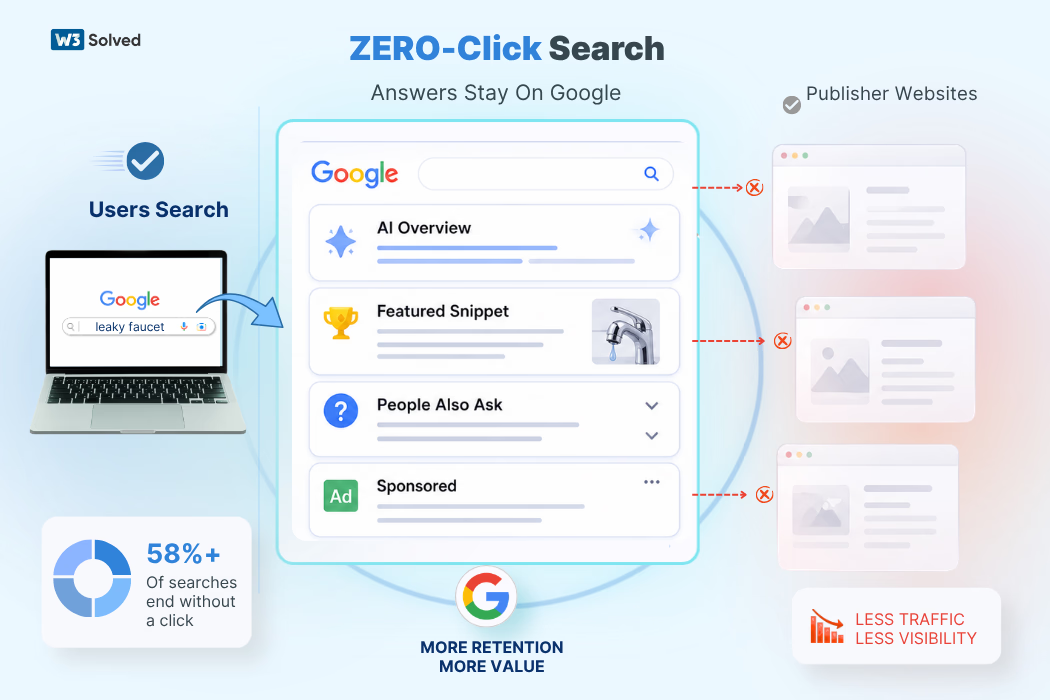
The business reason is engagement and ad revenue. Every second a user stays on Google's platform is an opportunity to show ads, collect data, and integrate users deeper into Google's ecosystem. Zero-click results keep users on Google properties longer, expose them to more ad inventory, and reduce their dependence on external websites. Google Search is not primarily a traffic source for publishers. It is a destination product that happens to link to external sites when necessary.
The competitive reason is defending against specialized search engines and answer platforms. If users learn they can get better answers from ChatGPT, Perplexity, or vertical search engines, Google loses query volume. By surfacing comprehensive answers directly in results, Google reduces the incentive to search elsewhere. Featured snippets, knowledge panels, and People Also Ask boxes are defensive moves as much as user experience improvements.
What This Means for Content Publishers
- Fighting the zero-click trend by withholding content from Google is not viable for most sites. Losing search visibility entirely is worse than gaining visibility without clicks.
- The new opportunity is owning the answer box rather than owning position one. Being the source Google trusts for answers builds authority even when direct traffic declines.
- Content strategy must optimize for visibility, brand mentions, and selective conversions rather than broad traffic volume.
- Publishers relying entirely on programmatic ad revenue from organic traffic are in a declining business model. Diversification into other revenue streams and conversion goals is not optional.
The publishers winning in this environment treat featured snippets as brand advertising rather than traffic generation. The goal is to own the most visible real estate for target queries, build authority through repeated exposure, and convert the subset of users who do click through at higher rates because they already trust the brand.
The Four Types of Featured Snippets and When Each Appears
Google displays featured snippets in four primary formats, each serving different query types and requiring different content structures to capture.
Paragraph Snippets
Paragraph snippets appear for definition, explanation, and descriptive queries. Google extracts 40 to 60 words of text and displays them in a box above organic results. These are the most common snippet type, accounting for roughly 82% of all featured snippets.
Paragraph snippets work best when you structure content with a clear question as a heading followed immediately by a concise answer. The answer should stand alone without requiring surrounding context to make sense. Google prefers definitions that name the thing being defined in the first sentence, followed by a brief explanation of how it works or why it matters.
List Snippets
List snippets appear for how-to queries, ranking queries, and any search where the answer is naturally sequential or hierarchical. Google extracts items from numbered or bulleted lists and displays them in order. If your content uses subheadings as list items, Google may pull those instead of actual list formatting.
2. Analyze the root cause of the violation
3. Remove or fix the violating content or links
4. Document all changes made during remediation
5. Submit a reconsideration request with detailed explanation
6. Monitor rankings and traffic for recovery signals
List snippets favor content that uses ordered lists for steps and unordered lists for collections of items. Each list item should be specific enough to be useful on its own but brief enough to fit Google's display constraints. Lists longer than eight items are often truncated with a "more items" link, so prioritize your strongest points first.
Table Snippets
Table snippets appear for comparison queries, data queries, and searches where the answer involves multiple dimensions. Google extracts table data and reformats it to fit mobile and desktop displays. These are particularly common for versus queries, pricing comparisons, and specification lookups.
| Aspect | SEO | SEM |
| Cost | Free (organic) | Paid (per click) |
| Timeline | 3-6 months | Immediate |
| Sustainability | Long-term | Stops when budget ends |
Table snippets require actual HTML tables in your content. Google does not reliably extract comparison information from paragraphs or lists and reformat it as a table. If you want a table snippet, you must publish table-formatted content. Keep tables simple with clear headers and no more than four or five rows for optimal extraction.
Video Snippets
Video snippets appear for queries where visual demonstration adds value over text. Google pulls videos from YouTube primarily, but also considers videos embedded on web pages. The snippet shows a thumbnail, title, timestamp, and direct link to play the relevant section.
Video snippets work best for how-to queries involving physical processes, visual transformations, or step-by-step demonstrations. Google's algorithms now identify specific moments within videos that answer particular queries, so a single video can trigger snippets for multiple related searches.
To optimize for video snippets, structure your video with clear verbal cues that match search queries. Say the question out loud before answering it. Use chapter markers or timestamps in the video description to help Google identify relevant sections. Publish the video on YouTube with a detailed transcript and embed it on a page with supporting text content that reinforces the query intent.
How to Structure Content to Win Featured Snippets
Winning featured snippets is not about gaming an algorithm. It requires writing content in the specific format Google's extraction systems recognize and prefer. The structure matters more than the quality of the underlying information because Google's systems operate on pattern matching, not editorial judgment.
Start with the Question
Use the exact query as a heading. If people search for "how to reduce bounce rate," your heading should be "How to Reduce Bounce Rate" rather than a creative variation like "Bounce Rate Reduction Strategies." Google matches headings to queries when deciding what to extract, and exact matches win more often than paraphrases.
Place the question heading in an H2 or H3 tag. H1 is typically reserved for page titles and rarely gets extracted. H4 and below are considered too minor. The sweet spot for snippet-worthy headings is H2 and H3.
Answer Immediately and Concisely
The first paragraph after your question heading must answer the question in 40 to 60 words. This is not an introduction or a preamble. It is the direct answer. Everything else comes after.
Structure the answer sentence to include the query term and provide a complete thought that stands alone. If someone reads only the snippet and nothing else, they should have a useful answer. Context and detail belong in the paragraphs that follow, but the snippet-worthy answer comes first.
H2: What is technical SEO?
Technical SEO is the process of optimizing a website's infrastructure to help search engines crawl, index, and understand its content more effectively. It focuses on site speed, mobile usability, structured data, XML sitemaps, and server configuration rather than content creation or link building.
[Additional paragraphs with deeper explanation, examples, and related topics follow here]
Use Formatting That Google Recognizes
Google's extraction algorithms favor specific HTML patterns. Use these deliberately:
- Definition lists (dl, dt, dd tags): Perfect for term definitions where you want the term bolded and the definition below it
- Ordered lists (ol, li tags): Required for step-by-step instructions and processes that have a natural sequence
- Unordered lists (ul, li tags): Best for collections of items, features, or benefits with no inherent order
- Tables (table, th, td tags): Necessary for comparisons, specifications, or any data with multiple dimensions
- Strong or bold tags: Useful for emphasizing key terms within paragraph snippets
Avoid complex formatting like nested lists, merged table cells, or paragraphs with multiple embedded links. Google's extraction prefers clean, simple structures that render clearly across devices.
Match Content Depth to Query Intent
Not every query deserves a long-form article. Some questions have simple answers that do not require 2,000 words of supporting content. Google increasingly favors pages where the depth of content matches the complexity of the query.
For simple factual queries, a 300-word page with a clear answer often outperforms a 3,000-word comprehensive guide because the signal-to-noise ratio is better. The extraction algorithm finds the answer faster, and users who do click through get their information without scrolling through unrelated material.
For complex queries that involve multiple steps, comparisons, or context-dependent answers, comprehensive content wins because Google needs surrounding material to validate that the extracted snippet is accurate and well-supported.
The test is this: if you removed everything except the snippet-worthy section, would the page still be useful? If yes, you probably have too much ancillary content. If no, your depth is appropriate.
Technical Requirements: Schema, HTML, and Page Structure
Featured snippet optimization is partly editorial and partly technical. The right content structure gets you in consideration, but technical implementation determines whether Google can extract and display your content reliably.
Schema Markup for Enhanced Snippets
Schema markup does not directly cause featured snippets, but it reinforces content structure and helps Google understand what your content represents. Three schema types are particularly relevant:
HowTo schema marks up step-by-step instructions with individual steps, images, and tools required. Google uses this to generate enhanced list snippets with expandable steps and rich formatting. Implement it on any page answering a how-to query.
FAQ schema marks up question-and-answer pairs on a single page. Google can extract individual QA pairs as featured snippets or display multiple pairs in an expanded featured snippet block. This is particularly effective for pages targeting multiple related questions.
Article schema with speakable properties identifies which sections of an article are optimized for voice search and text-to-speech. While this does not guarantee featured snippet placement, it signals to Google that specific sections are designed for extraction.
Schema Implementation Checklist
- Validate schema using Google's Rich Results Test before publishing to catch syntax errors that prevent processing
- Apply HowTo schema to procedural content with numbered steps and clear completion criteria
- Use FAQ schema when a page answers multiple variations of the same core question
- Mark only the snippet-worthy content with schema, not every paragraph on the page
- Monitor Search Console for rich result errors and fix them immediately to maintain eligibility
HTML Structure Best Practices
Clean semantic HTML helps Google's extraction systems identify content boundaries and understand content hierarchy. The systems are robust enough to handle messy HTML, but clean markup improves your odds.
Use heading tags in proper order without skipping levels. If your page title is H1, the next heading should be H2, not H3. Nested sections should increment by one level. This creates a logical document outline that extraction algorithms can parse reliably.
Avoid wrapping snippet-worthy content in complex div structures or JavaScript-rendered elements. Google can extract from JavaScript-generated content, but static HTML is faster and more reliable. If your content management system renders lists or tables through JavaScript, test whether Google actually extracts them by checking Search Console or using the URL Inspection tool.
Keep paragraph length reasonable. Snippets rarely extract from paragraphs longer than 100 words because they become too dense to fit snippet display constraints. Break long blocks of text into shorter paragraphs with clear topic sentences.
Mobile Optimization and Core Web Vitals
Google uses mobile-first indexing, meaning it evaluates your mobile page for snippet eligibility even when the query comes from a desktop user. If your mobile page hides content behind accordions, tabs, or progressive disclosure, that content is less likely to be extracted for snippets.
Core Web Vitals affect snippet eligibility indirectly. Pages with poor loading performance, layout shift, or interactivity delays rank lower overall, which reduces their chances of being selected for featured snippets. Google's snippet selection algorithm considers overall page quality signals, not just content relevance.
Test your target pages on mobile devices and verify that snippet-worthy content appears above the fold without requiring interaction. Content that requires a click to expand or scroll to reach is at a disadvantage.
Matching Content Format to Search Intent
The format of your answer must match what users expect when they search for a particular query. Mismatched format is one of the primary reasons good content fails to win snippets.
Definitional Intent
Queries beginning with "what is," "what are," "define," or "meaning of" expect paragraph snippets with clear definitions. The first sentence should name the term being defined and provide a category or classification. The second sentence should explain its function, purpose, or significance.
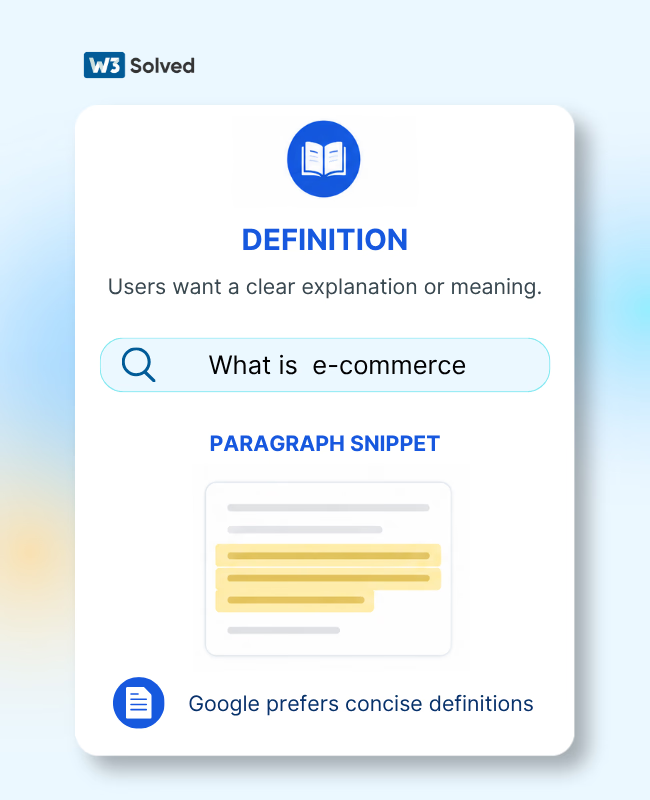
Example structure: "[Term] is a [category] that [function/purpose]. It [explanation of how it works or why it matters]."
Definitional content should avoid examples and context in the snippet-worthy section. Those belong in paragraphs that follow the definition. The extracted answer needs to be universally applicable without qualification.
Procedural Intent
Queries beginning with "how to," "ways to," or "steps to" expect list snippets with sequential actions. Each step should begin with an action verb and describe a single discrete task. Steps that contain multiple actions or require sub-steps should be broken apart.
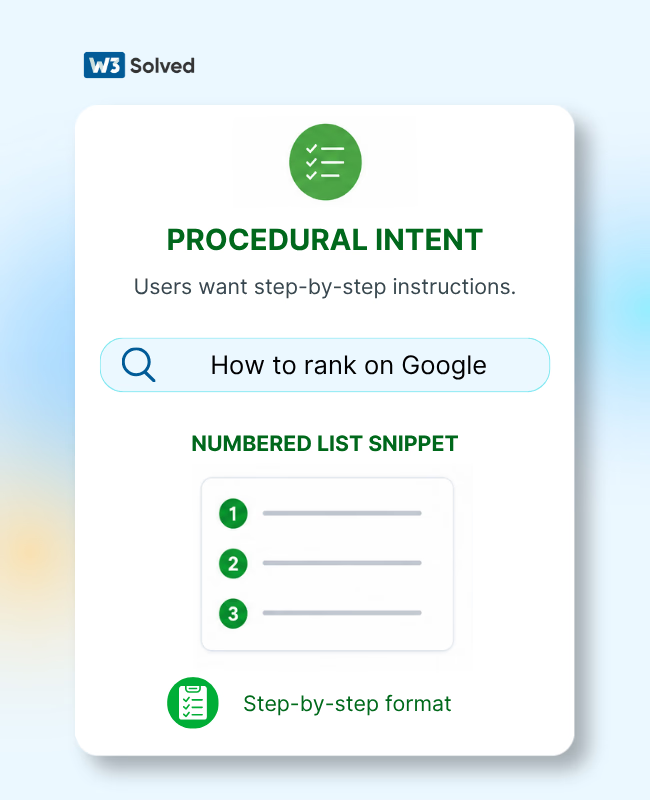
Number your steps explicitly using ordered list markup. Do not rely on paragraph numbers or manual numbering within text because Google may not extract them correctly.
Keep step descriptions to one or two sentences each. Long explanatory paragraphs within steps reduce extraction likelihood. If a step requires detailed explanation, provide a brief directive in the list item and expand on it in a paragraph below the list.
Comparison Intent
Queries including "vs," "versus," "difference between," or "compared to" expect table snippets or structured comparisons. The comparison must be balanced, covering the same attributes for each item being compared.
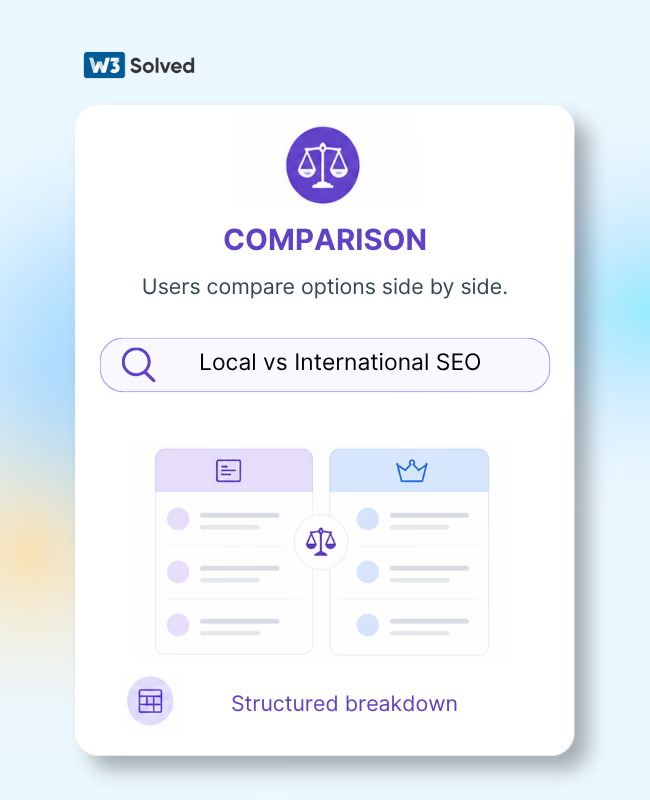
Use actual HTML tables with clear headers identifying what is being compared. The first column should list attributes, and subsequent columns should contain the values for each compared item. Avoid narrative comparisons written in paragraph form because Google rarely extracts those into structured snippets.
Navigational and Transactional Intent
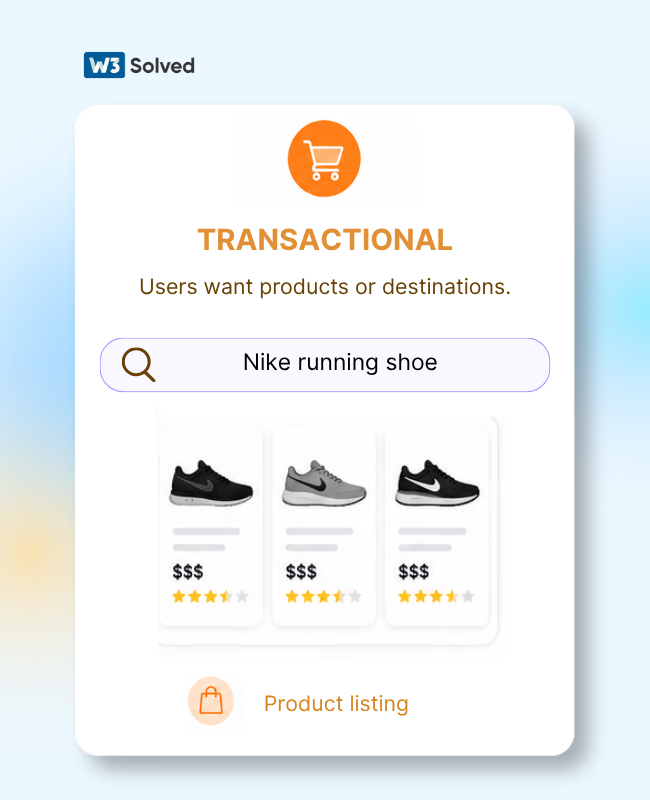
These query types rarely generate featured snippets because users want to reach a specific destination or complete a purchase, not consume information on the search results page. Navigational queries like brand names trigger knowledge panels rather than snippets. Transactional queries like product searches trigger shopping results.
Do not waste optimization effort trying to win snippets for queries where Google has decided snippets do not serve user intent. Focus on informational queries where snippets are the dominant SERP feature.
How to Measure Success When Clicks Are Not the Goal
Traditional SEO metrics like organic traffic and conversions are incomplete measures of featured snippet performance. You need different benchmarks that reflect the unique value proposition of position zero.
Impression Share and Visibility
Google Search Console reports impressions for every query that triggered your pages in search results, regardless of whether users clicked. When you win a featured snippet, impressions typically increase because your result appears for more variations of the core query.
Track impression share for your target keyword set. Impression share measures how often your pages appear in results compared to total search volume for those keywords. Rising impression share with flat or declining traffic indicates you are gaining visibility in zero-click searches.
Calculate visibility score by weighting impressions by position. A featured snippet impression is worth more than a position five impression because it occupies more visual space and appears above competing results. Custom dashboards in Search Console or third-party tools can track this over time.
Featured Snippet Ownership Rate
This metric measures what percentage of your target queries trigger featured snippets that you own. If you target 100 keywords and 40 of them show featured snippets, your opportunity set is 40. If you own snippets for 12 of those, your ownership rate is 30%.
Track this monthly to see whether snippet optimization efforts are working. Rising ownership rate means your content structure is winning more extractions. Declining rate suggests competitors are outmaneuvering you or Google is removing snippets from queries where they previously appeared.
Tracking featured snippet ownership: Use Search Console's Performance report filtered by query to identify which searches show your pages with high impressions but low clicks. These are likely snippet positions. Cross-reference against manual SERP checks to confirm. Tools like SEMrush and Ahrefs also track snippet ownership across keyword sets, but manual verification ensures accuracy for your most important queries.
Brand Lift and Awareness Metrics
Featured snippets build brand awareness even when users do not visit your site. Your domain name appears prominently on the results page next to authoritative-looking content. Over time, this repeated exposure influences brand recall and consideration.
Measure branded search volume as a proxy for awareness. Users who see your brand in featured snippets for informational queries may later search for your brand name directly when they have a transactional need. Rising branded search volume correlates with featured snippet growth in competitive environments.
Survey visitors about how they discovered your brand. Include "saw you in Google search results" as a distinct option from "clicked through from Google." This captures the awareness value of snippet visibility separate from direct traffic attribution.
Assisted Conversions and Multi-Touch Attribution
Featured snippets often appear early in the customer journey when users are researching problems and exploring solutions. They may not convert immediately, but they enter your funnel and return later through different channels.
Use Google Analytics 4's path exploration reports to identify journeys where a user first interacted with your site through organic search but converted through a different session or channel. These assisted conversions would not exist without the initial awareness created by search visibility, including snippets.
Track position in conversion path for organic search sessions. If organic traffic from snippet-heavy keywords appears disproportionately in early-path positions rather than last-click attribution, the snippets are doing their job as awareness drivers even if direct ROI looks weak.
Featured Snippets and Voice Search: The Connection You Cannot Ignore
Voice search uses featured snippets as its primary data source. When someone asks Google Assistant, Siri using Google, or any voice-enabled Google product a question, the spoken answer typically comes from the featured snippet for that query.
This makes featured snippet optimization a prerequisite for voice search visibility. You cannot rank in voice search results without first ranking in text search results, and the featured snippet position is what voice assistants read aloud.
How Voice Search Changes Content Requirements
Voice queries are longer and more conversational than typed queries. Someone typing might search "coffee maker reviews," but someone speaking asks "what is the best coffee maker for under 100 dollars." Your content must target the conversational long-tail version to win voice-spoken featured snippets.
Structure answers to sound natural when read aloud. Short, punchy sentences work better than complex clauses. Avoid acronyms and abbreviations that sound awkward when spoken. Test your snippet-worthy content by reading it out loud. If it sounds stilted or requires visual formatting to make sense, it will not translate well to voice.
Answer questions in complete sentences that restate the question. If someone asks "how long does it take to rank in Google," the answer "three to six months for most websites" is clearer when spoken than "it takes three to six months" because the spoken version does not have visual context reminding the listener what "it" refers to.
Local Search and Voice
Voice search has disproportionate impact on local queries. "Near me" searches, hours of operation questions, and local business information lookups are dominated by voice on mobile devices. Optimizing for local featured snippets means claiming and optimizing your Google Business Profile, structuring location pages with clear answers to common questions, and using FAQ schema for questions like "when does [business] open" or "does [business] deliver."
Local snippets pull from Google Business Profile data as well as website content. Ensure your GMB information is complete, accurate, and answers the questions voice searchers commonly ask about businesses in your category.
Real Examples: Before and After Snippet Optimization
Seeing the concept in practice clarifies what works. These examples show how specific content changes led to featured snippet wins.
Example 1: SaaS Company Targeting "What is [Product Category]"
Before: The company's category definition page opened with three paragraphs of context about industry challenges before defining the product category. The definition itself was buried in the fourth paragraph and used marketing language rather than clear explanation.
Changes Made: Restructured the page to lead with an H2 heading asking "What is [category]?" followed immediately by a 52-word paragraph defining the category in plain language. Moved contextual material to later sections.
Results: Won the featured snippet within two weeks. Impressions increased 340% for the target keyword and related variations. Click-through rate dropped from 12% to 6%, but total clicks increased by 83% due to impression growth. Branded search volume rose 28% over the following quarter.
Example 2: Home Services Site Targeting "How to [Task]"
Before: How-to content was written in paragraph form with steps explained narratively. The page included useful information but lacked clear list formatting.
Changes Made: Converted the process into a numbered list with each step as a discrete list item starting with an action verb. Added HowTo schema markup identifying each step and its associated image.
Results: Won the featured snippet for the primary keyword plus nine related how-to variations. The snippet appeared in mobile voice search results when users asked the question aloud. Traffic declined 15% but lead form submissions increased 41% because the traffic that did click through was more qualified and already trusted the brand from repeated snippet exposure.
Example 3: Financial Services Firm Targeting Comparison Queries
Before: Comparison content was written as side-by-side paragraphs describing each option separately. Readers had to mentally compile the comparison across sections.
Changes Made: Created an HTML table comparing the two options across seven key attributes: cost, timeline, complexity, tax treatment, risk level, liquidity, and best for. Each cell contained a brief factual statement.
Results: Won the table snippet for the main comparison query. The snippet also triggered for eight related queries about specific attributes. Traffic from the target keywords dropped 22%, but the page became the top-performing content asset for assisted conversions, appearing in 34% of conversion paths for users who eventually became clients.
The Five Mistakes That Kill Your Featured Snippet Chances
Most featured snippet optimization failures come from repeated errors that are easy to avoid once you know what to look for.
Mistake 1: Burying the Answer
The snippet-worthy answer must appear immediately after the question heading. Many pages provide context, background, or related information before getting to the actual answer. By the time the answer appears, Google's extraction window has closed.
The fix is simple: answer first, explain later. Put the direct response in the first paragraph after the heading. Everything else goes below.
Mistake 2: Answers That Require Context
Snippets appear isolated from the rest of your page. If your answer relies on information from previous paragraphs or requires surrounding context to make sense, it will not work as a snippet even if Google extracts it.
Test every snippet candidate by reading it alone without any surrounding content. If the answer is unclear or incomplete, rewrite it to be self-contained.
Mistake 3: Wrong Format for Query Intent
Answering a how-to query with a paragraph instead of a list, or answering a comparison query with narrative text instead of a table, eliminates your snippet chances regardless of content quality.
Check what format currently appears in the snippet for your target query. Match that format exactly. Google's format preference for a query is clear from what it currently displays.
Mistake 4: Overly Creative or Clever Language
Featured snippets favor plain, direct language over creative writing. Metaphors, analogies, and clever turns of phrase make content engaging for human readers but confusing for extraction algorithms.
Use literal, descriptive language in snippet-worthy sections. Save creativity for the deeper content that appears after the extracted portion.
Mistake 5: No Competitive Analysis
The snippet position is zero-sum. If a competitor owns it, you cannot win it without displacing them. Many optimization efforts fail because they focus on creating good content without analyzing what the current snippet holder is doing better.
Before optimizing for a snippet, examine the page that currently owns it. What format are they using? How is their answer structured? What length are they using? What surrounding content supports the snippet? Match or exceed their approach rather than creating something different.
Critical reminder about snippet volatility: Featured snippets change frequently. A snippet you win today may be lost next week if a competitor publishes better-optimized content or if Google decides the query no longer merits a snippet. This is not a set-it-and-forget-it tactic. Monitor your snippet positions weekly and be prepared to update content when competitors displace you.
What Comes Next: AI Overviews and the Evolution of Position Zero
Featured snippets are not the end state of Google's zero-click evolution. The May 2024 introduction of AI Overviews, now appearing on roughly 15% of queries as of May 2026, represents Google's next step in answering questions without sending traffic.
AI Overviews synthesize information from multiple sources rather than extracting from a single page. They appear above featured snippets when present, pushing traditional results even further down the page. For queries where AI Overviews appear, zero-click rates approach 75%.
The sources Google cites within AI Overviews come from pages that rank well organically and contain well-structured, factual content. Featured snippet optimization techniques translate directly to AI Overview inclusion: clear question headings, concise answers, proper formatting, and schema markup all increase the likelihood that your content gets cited.
The strategic implication is that optimization for traditional featured snippets remains relevant even as Google introduces new answer formats. The underlying content quality and structure requirements are consistent across snippet types.
Voice and Multimodal Search
Voice search continues to grow, now accounting for roughly 27% of all Google searches on mobile devices. Multimodal search, where users combine voice, images, and text in a single query, is emerging as a significant trend particularly in mobile and smart home environments.
Both trends reinforce the importance of featured snippets. Voice assistants read featured snippet content aloud. Multimodal searches that include a spoken question component also pull from snippet data. Content optimized for featured snippets is automatically optimized for these emerging search behaviors.
The Platform Play
Google's long-term strategy appears focused on becoming the answer destination rather than the gateway to answers hosted elsewhere. Every new feature, from featured snippets to AI Overviews to Shopping integration, keeps users on Google properties longer and reduces reliance on external websites.
For publishers, this means continued decline in traffic-per-ranking-keyword even as visibility and influence remain achievable. The businesses that adapt successfully will be those that treat search visibility as brand building and awareness generation rather than pure traffic acquisition.
This is not defeatist. It is strategic clarity. The game changed. Playing the old game with old metrics leads to frustration. Playing the new game with appropriate goals and measures creates opportunities that competitors fixated on traffic volume will miss.
Frequently Asked Questions
What is a zero-click search and why does it matter for SEO?
A zero-click search occurs when Google answers a user's query directly on the search results page through featured snippets, knowledge panels, local packs, or other SERP features, eliminating the need to click through to any website.
As of 2026, roughly 57% of all Google searches end without a click to an external site. This matters because traditional traffic-focused SEO strategies lose effectiveness when users never leave Google. The new challenge is capturing visibility, authority, and brand recognition even when users do not click through to your site.
Zero-click searches shift the value proposition from traffic generation to brand positioning. Winning featured snippets places your content in the most visible position on the results page, builds authority through association with quality answers, and captures the subset of users who do click at much higher conversion rates because they already trust your expertise.
How do I optimize content to win featured snippets in 2026?
Winning featured snippets requires structuring content to match how Google extracts and displays answers. Use clear question-based headings that mirror actual search queries. Provide concise answers in 40-60 words immediately after the question. Format content with definition lists, numbered steps, or comparison tables depending on query intent.
Use schema markup to reinforce content structure. HowTo schema works for procedural content, FAQ schema works for question-answer pages, and Article schema with speakable properties signals content designed for voice extraction.
Target questions in the People Also Ask section and verify your answers against what currently ranks in position zero. The key is giving Google extraction-ready content that directly answers the query without requiring interpretation or reformatting.
What types of featured snippets exist and which should I target?
Google displays four primary featured snippet types:
- Paragraph snippets for definition and explanation queries (what is, why, when)
- List snippets for how-to and ranking queries (how to, best, steps to)
- Table snippets for comparison and data queries (vs, difference, comparison)
- Video snippets for visual demonstrations and tutorials
Analyze your target keywords to see which snippet format currently appears for each query. Match your content structure to that format exactly. Google's format preference is revealed by what it already displays, and matching that format dramatically improves your extraction odds.
Prioritize paragraph and list snippets first as they account for over 90% of all featured snippets. Table snippets are valuable for comparison-heavy niches. Video snippets require video production capability but offer voice search advantages.
Does ranking in position zero still drive traffic if users don't click?
Yes, but the value shifts from direct traffic to brand visibility and authority signaling. Featured snippets occupy the most prominent real estate on the search results page, placing your brand above all organic results.
Users see your domain name, page title, and content excerpt even if they do not click through. This repeated visibility builds brand recognition and influences later searches when users have buying intent.
Featured snippets typically see a 20-30% click-through rate from users seeking more detail, which is significantly higher than position three or four in standard results. The combination of visibility, authority positioning, and selective clicks makes featured snippets valuable despite the zero-click trend.
Additionally, featured snippets often appear early in multi-touch conversion paths. Users who see your snippet for an informational query may not convert immediately but return later through branded search or other channels. Assisted conversion tracking reveals this delayed value.
How can I measure success in a zero-click search environment?
Success metrics must expand beyond traffic and conversions. Track featured snippet ownership using Google Search Console to monitor how many queries trigger your snippets. Measure impression share for target keywords to understand total visibility regardless of clicks.
Monitor branded search volume as an indicator of awareness gained from snippet exposure. Track position distribution to see how many keywords rank in positions 1-3 versus lower positions.
Use assisted conversion tracking in Google Analytics 4 to identify searches that contributed to conversions even when the initial interaction did not involve a click. Path exploration reports show where organic search appears in multi-touch journeys.
Calculate visibility score by weighting impressions according to position. Featured snippet impressions are worth more than position five impressions in terms of brand exposure and authority building. The goal is measuring visibility, authority, and brand impact rather than just session counts.
What is the relationship between featured snippets and voice search?
Featured snippets serve as the primary content source for voice search responses on Google Assistant and similar platforms. When someone asks a voice assistant a question, Google typically reads the featured snippet answer aloud.
This makes snippet optimization critical for voice search visibility. Voice queries tend to be longer and more conversational than typed searches, so target natural language questions rather than short keyword phrases. Structure answers to sound natural when read aloud, using complete sentences that restate the question.
The snippet that wins for typed searches usually wins for voice searches on the same query, making featured snippet optimization a unified strategy covering both traditional and voice search. Test your snippet-worthy content by reading it out loud. If it sounds awkward or relies on visual formatting, it will not translate well to voice responses.
How long does it take to win a featured snippet after optimizing content?
Featured snippet changes happen faster than traditional ranking movement. For pages already ranking on page one, snippet-optimized content updates can trigger extraction within days to two weeks as Google recrawls and reevaluates the page.
For pages not yet ranking on page one, you must first achieve top-ten visibility before snippet eligibility. Google rarely pulls featured snippets from pages ranking below position ten. This means snippet optimization works in tandem with traditional ranking improvement, not as a replacement for it.
Once you win a snippet, expect volatility. Featured snippets change more frequently than organic rankings because the barrier to displacement is lower. A competitor who publishes better-structured content can take your snippet quickly. Monitor snippet positions weekly and update content promptly when you lose ownership to understand what changed and regain the position.
Can I prevent Google from using my content in featured snippets?
Yes, using the data-nosnippet HTML attribute on specific content sections or the max-snippet robots meta tag at the page level. Adding data-nosnippet="true" to a div or paragraph prevents Google from using that content in any snippet. Setting max-snippet:0 in your robots meta tag blocks all snippet extraction from the page.
However, blocking snippets is rarely advisable. Featured snippets provide visibility and authority signaling that outweigh the traffic loss in most cases. The primary scenario where blocking makes sense is when snippet extraction removes the incentive to click through for commercial queries where you need traffic to monetize.
Before blocking, test whether the snippet actually reduces valuable traffic or just shifts low-value informational traffic away while preserving higher-quality clicks from users seeking more depth. Most sites benefit from snippet visibility even with reduced click volume.
Do AI Overviews replace featured snippets or work alongside them?
AI Overviews appear above featured snippets when both are present, but they do not replace snippets entirely. As of May 2026, AI Overviews appear on roughly 15% of queries, while featured snippets still appear on 40-45% of queries.
For queries where both appear, the AI Overview synthesizes information from multiple sources and appears at the top of the page, while the traditional featured snippet appears below it. This pushes organic results further down and increases zero-click rates to approximately 75% for those queries.
Content optimization strategies for featured snippets translate directly to AI Overview inclusion. Google cites sources within AI Overviews that contain well-structured, factually accurate content with clear formatting. The same techniques that win featured snippets increase your odds of being cited in AI Overviews.
Ready to Win Featured Snippets and Dominate Position Zero?
W3 Solved specializes in featured snippet optimization, content restructuring for zero-click environments, and SEO strategies that build authority when traffic alone is not enough. If you want to capture visibility in the queries that matter to your business and convert the high-intent users who do click through, we can show you exactly how to get there.
Get a Free SEO Assessment