Think of your sales team starting the day with emails full of warm leads.These are people who have visited your site, filled out a form, and expressed real interest in what you offer.No endless cold calls. No time wasted on dead ends.
That’s what a strong lead-generating website can do. The problem is most websites never get there.
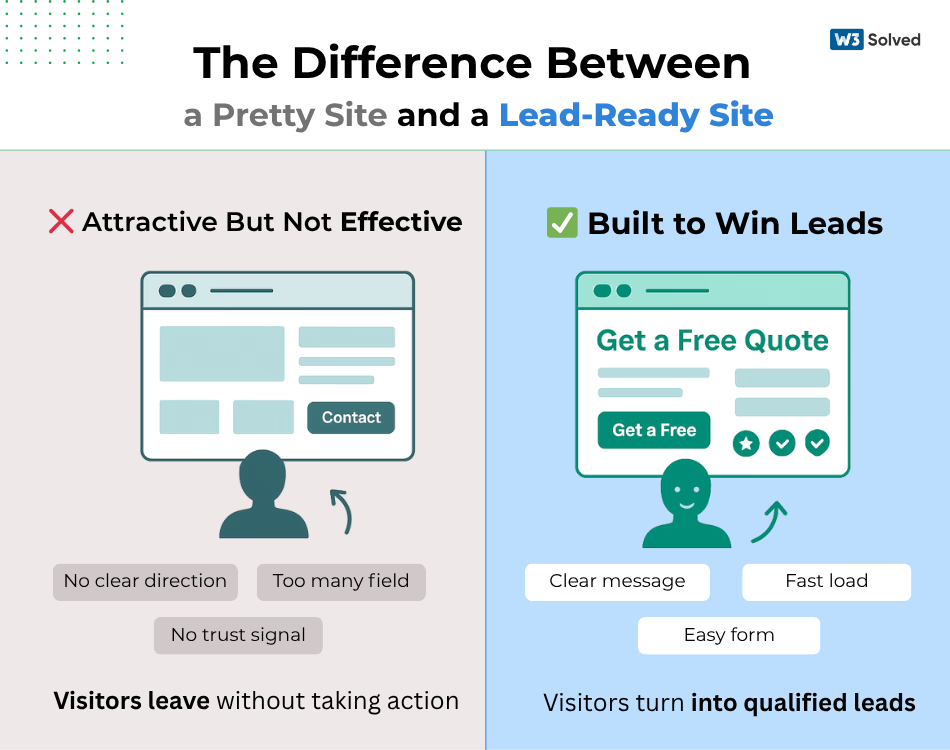
They may look good on the surface, but they let visitors slip away without taking action. No forms filled. No follow-ups. No pipeline.
We have worked with more than 500 businesses to make their websites pull in leads reliably.
In this post, I will walk you through the exact process that should be used. This is a clear plan you can follow, with real steps and examples.
When you finish reading, you will understand:
- How to build a fast, SEO-ready foundation that draws in visitors.
- Ways to design pages that turn browsers into qualified leads.
- Simple automation setups to nurture and route leads to sales.
- Traffic tactics using content and ads that deliver quick results.
- Measurement methods to test, tweak, and scale your system.
Let’s get started.
Why Most Websites Miss Leads & Yours Will Not?
Before fixing the problem, let’s see why most websites fail to convert. According to recent conversion rate benchmarks, the average website converts only 2.6 percent of visitors into leads.
That is not good enough. The main reasons include:
- No strong value up front. People arrive, get confused, and click away.
- Too many barriers. Long forms, slow pages, and nothing to build trust.
- No follow-through. Leads get noted but then sit ignored in a file.
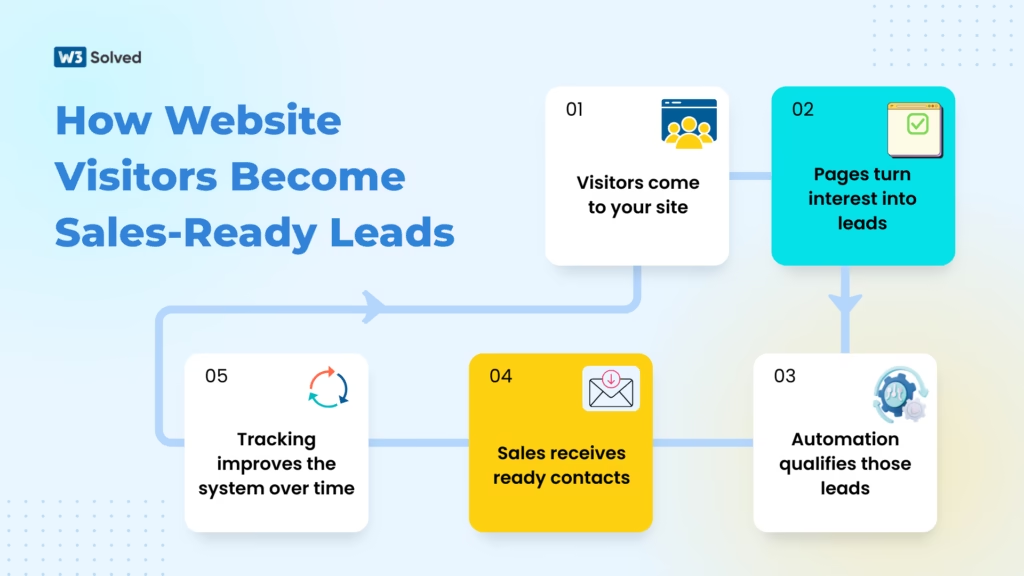
The solution is to treat your site like a tool for sales, not just information. Build it as a path: draw people in, keep them interested, get their details, follow up, and pass them to sales.
- Focus on your ideal customer from the start. What problems do they face? What keeps them worried? Build your website around it.
The 5-Step Lead Generation System
Now, we will go through each step.
Before You Start: What Makes a Website “Lead-Ready”
A lead-generating site is not about visuals alone. It is about removing friction and building trust.
Think of your site as a funnel: attract the right visitors, engage them with value, convert their interest, and follow up effectively.
Each step you will see below strengthens one of these areas.
- Step 1 → Set Up the Basics, Speed, SEO, and Structure.
- Step 2 → Turn Every Page into a Conversion Engine
- Step 3 → Automate the Follow-Up
- Step 4 → Attract and Convert Traffic
- Step 5 → Measure, Improve, Repeat
Step 1: Build the Foundation: Speed, SEO, and Structure
If your website loads slowly or does not appear in search results, it will never generate leads. People must be able to find you first, and when they do, your site must load fast and feel easy to navigate.
Strong technical SEO, clean page structure, and fast load times create the foundation.
Without them, even the best offers and copy will fail to convert.
Make It Load Fast
Speed directly impacts conversions. Google reports that 53% of mobile users leave a site if it takes longer than three seconds to load. Slow pages mean lost opportunities.
What to do:
- Shrink your images.
- Enable caching
- Clean up unused or bloated code
Even small delays matter. Amazon found that a 0.1-second delay can reduce conversions by 7%.
In one case, a client’s site improved its load time from 4.2 seconds to 1.8 seconds and gained 150 additional leads per month.
Attract the Right Visitors, Not Just Any Traffic
Leads start with targeted traffic. You need visitors who are actively searching for solutions you provide.
Start by targeting high-intent keywords: the exact phrases your ideal customers type when they’re looking for answers. Think “CRM for small business” instead of just “CRM software.”
Focus on search terms that signal buying intent, not casual research. These visitors convert at 3-5x higher rates than general traffic.
Start with these essentials:
- Research intent-driven keywords
- Use clear, logical headings (H1, H2, H3)
- Link related pages together to guide users and search engines
- Mobile optimization.
- Proper indexing and crawlability
- Structured data (schema markup) to improve visibility in search results
Good SEO does not just increase traffic. It increases qualified traffic.
Optimize Your Structure for User Flow
A good structure guides visitors naturally toward conversion. Your structure decides whether users explore, engage, and ultimately convert. When the flow feels effortless, people stay longer, understand your value faster, and take the next step without confusion.
- Keep navigation simple. Three to five main menu items are enough.
- Make your call-to-action buttons consistent. Use the same wording and color throughout the site.
- Place lead forms and contact buttons within the first scroll of each key page.
- Create a clear page hierarchy: Home → Services → Case Studies → Contact.
- Include breadcrumbs so visitors always know where they are.
Step:2- Build Pages That Turn Visitors into Leads.
Every page on your site should push visitors toward one action. When designed correctly, your website becomes part of your sales process, not just a place to browse.
Strong Landing Pages
A strong landing page captures attention, builds trust, and encourages immediate response.
Avoid sending all traffic to your homepage. Instead of sending visitors to your homepage, create focused pages like, “Book Your First Home Cleaning at 20% Off”
Key Components of a High-Converting Landing Page:
- Top section: A clear headline, short explanation, and button to act.
- Proof from others:Quotes, stories, or company names.
- Talk benefits instead of just listing tools.
- Popups for leaving visitors.
Alter things here and there. Test changes to find out which ones work best for your visitors. We found that custom buttons can raise clicks by up to 42 percent.
Forms That Actually Get Filled Out
Forms bring in leads. But most the forms have too many questions which is unnecessary.
Keep it simple & concise.
Start with three fields: name, email, and one custom question, such as “What service are you interested in?”
Remember, less is often more when it comes to forms and CTAs.
Focus on the core personal information, remove distractions, and constantly test and iterate to improve your conversions.
When you get your pages right, you’ll not only attract more visitors, but you’ll turn them into valuable leads.
Step:3- Set Up Automatic Lead Handling.
Manual work wastes hours and often lets leads go cold. Automation keeps your work active even when you are not online.
Smart Email Follow-Ups That Build Interest
Once someone signs up or downloads something, automation tools like ActiveCampaign, Mailchimp can trigger timely follow-ups. The goal is to educate, not push.
A proven seven-day sequence:
- Day 1: Send a thank-you message and deliver the promised item.
- Day 2-3: Share a case study or a real success story.
- Day 4-5: Offer a free audit, demo, or consultation link.
- Day 6-7: Send a gentle nudge asking if they want to discuss solutions.
Keep subject lines short and personalized.
Score and Segment Leads Automatically
Not every contact is ready to buy. Use lead scoring to spot who is most engaged.
-
Assign points for specific actions: visiting pricing pages (+10), downloading guides (+20), booking demos (+40).
Once a lead crosses a score of 80, mark it as “hot” and send it to your sales team instantly.
Automation converts lead handling into a consistent, always-on system that nurtures interest, identifies intent, and routes opportunities without constant manual effort.
Integrate Everything for Instant Handoffs
Avoid manual data entry. Connect your forms, emails, and CRM or through native integrations.
- New leads go straight to your CRM.
- Tasks and notifications are created for your sales team automatically.
- Use Slack or Microsoft Teams alerts so no opportunity is missed.
Automation turns a slow response process into a 24/7 system that nurtures, scores, and routes leads without you lifting a finger.
Step 4: Drive Traffic With Content and Paid Channels
Leads need visitors first. Content and traffic channels should work together to attract the right people and turn attention into contact details.
Create Offers People Actually Want
Give something useful behind a form. Like guides, lists, or templates.
Ideas that convert well:
- A practical playbook focused on increasing leads.
- A short quiz that evaluates a current lead setup.
- Short videos with quick fixes.
Every click and form submission should be tracked to identify which offers produce real leads, not just traffic.
Paid Traffic for Faster Momentum
Organic growth takes time. Paid campaigns accelerate learning and results. Retargeting on platforms like Facebook or LinkedIn typically performs far better than cold traffic.
A modest starting budget, such as $500 per month, is enough to test and refine campaigns.
- Retargeting: People who visit your site once are three times more likely to convert if they see your ad again.
- Lookalike audiences:Use existing leads to find similar users on Facebook or LinkedIn.
- Keyword targeting:Focus on “solution intent” terms like “CRM automation for small business.”
Tracking through Google Analytics and Meta Pixel ensures every campaign can be measured and improved.
Combine Traffic with Offers
Always connect ads and content to a clear offer. If a blog gets traffic, add a relevant CTA like a free guide or consultation right within the page.
When content and campaigns align, you don’t just get visitors. You get warm leads ready for follow-up.
Step: 5- Track Results, Test, and Grow
Growth comes from measurement, not assumptions. Leads need visitors first. Use content that draws them and turns them into contacts. Every part of the system should be reviewed and improved continuously.
Track:
- Form conversion rates
- Email open and click rates
- Lead-to-meeting ratios
- Cost per qualified lead
Minor adjustments often produce meaningful gains. Test one variable at a time, such as headlines, button text, form length, or page layout. Results become clearer when changes are controlled and measured.
Scale Proven Channels
Once a campaign, offer, or traffic source shows consistent performance, increase investment gradually. Stop or adjust anything that does not produce qualified leads.
Tracking, testing, and scaling turn a working system into a predictable growth engine instead of a one-time win.
Start Your Journey with W3 Solved
A lead-focused website works as a great funnel. The foundation keeps it fast and visible. Here is the flow:
- Your website pages convert visitors into qualified leads.
- Automated workflows route those leads to your sales team in real time.
- Performance tracking continuously improves conversions and system accuracy.
Start with one simple step. Remove friction, improve a key page, or connect your forms to your CRM. Small fixes often lead to measurable improvements.
W3 Solved focuses on building websites that support real lead flow, not just traffic. If your site is not doing that yet, there are usually clear, fixable reasons.
What do you think is blocking leads on your site right now? You can share details through our contact page. Every message is reviewed.