You checked the map pack this morning and you're sitting at the top spot, right where you wanted to be. Then you check your phone, and it hasn't rung all day.
This happens to more local businesses than most owners realize. A first place ranking gets you in front of people searching for what you offer. It doesn't get them to pick up the phone, and the reasons why usually have nothing to do with your position on the map.
What You Will Learn?
Why Ranking First Doesn't Guarantee the Phone Rings?
Google's local algorithm is built to answer one question: which businesses are most relevant and most likely to satisfy this particular search. Relevance, distance and prominence decide who shows up in the map pack. None of those three factors have much to do with whether a stranger scrolling through three listings decides to trust yours enough to dial the number.
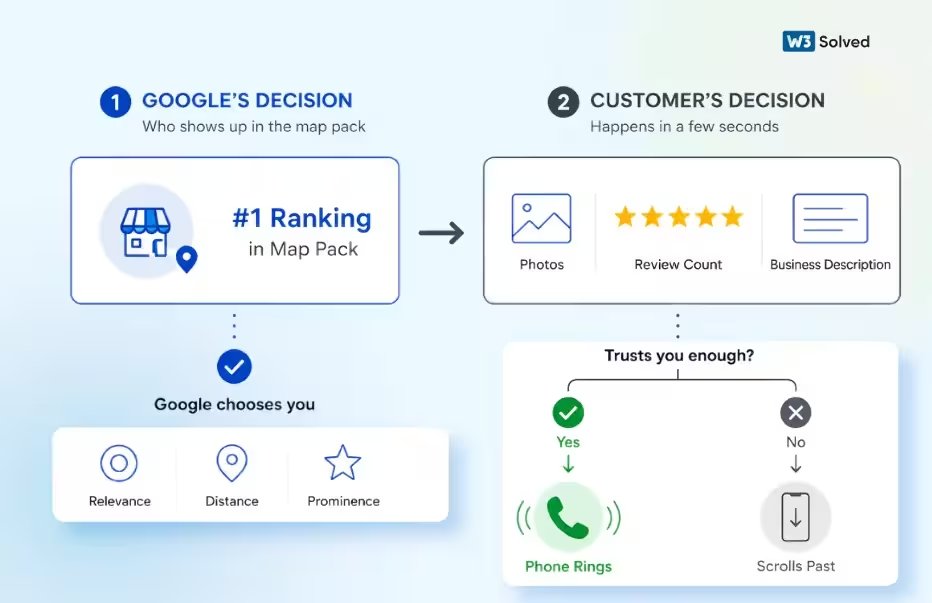
That second decision happens fast, usually in the few seconds someone spends glancing at photos, review counts and the first line of a business description. A profile can be technically correct and still lose that moment to a competitor sitting one or two spots lower.
Worth knowing: local ranking factor research from BrightLocal has consistently found that review signals and profile completeness carry significant weight in how local packs are built, which means the gap between ranking and converting is partly a ranking issue too, not purely a trust issue sitting outside the algorithm.
What's Quietly Costing You the Click?
A few things tend to undercut a profile that looks strong on paper. None of them show up in a rank tracker, and all of them show up in your call log.
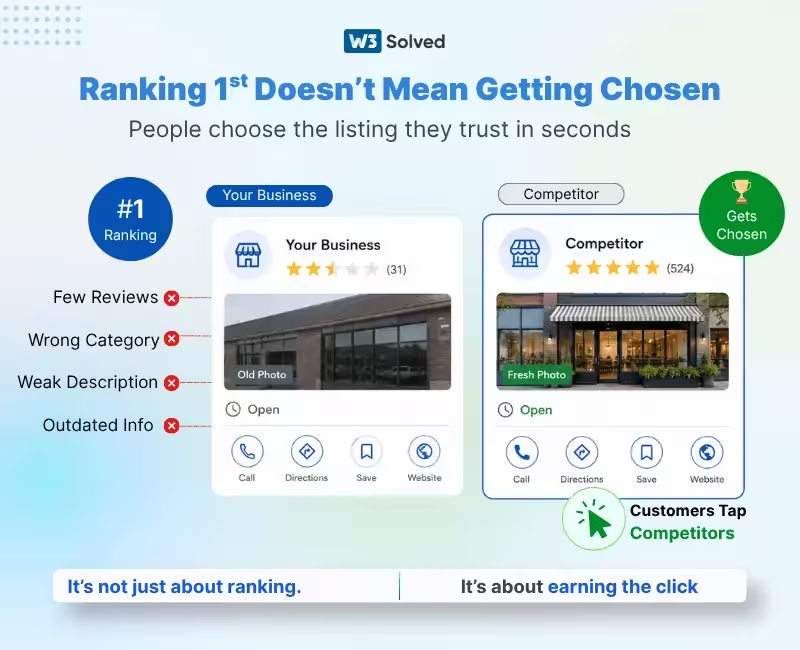
Photos that haven't been updated in a year or more make an active business look closed. A review count well below a nearby competitor's makes the decision easy for the searcher, and it's rarely in your favor. Missing categories or attributes mean Google surfaces less of your profile in the parts people glance at first. A business description written for keywords rather than people rarely earns the tap, even from the top spot.
Common mistake: treating the Google Business Profile as a one time setup instead of something that needs regular attention. A profile filled out once at launch and left untouched slowly drifts out of step with what a searcher expects to see from a business that's actively operating.
The Trust Signals Rank Trackers Don't Measure
Your rank tracker tells you where you sit against competitors for a given search term. It doesn't tell you how your profile compares on the signals that actually move someone from browsing to calling.
What Searchers Actually Weigh Before Calling?
- How recent the photos look, and whether they show real people and real work rather than stock imagery
- Whether the review count and rating feel proportional to how established the business appears
- Whether the business description sounds like it was written for a person standing in front of you or for a crawler
- How quickly and specifically the business responds to recent reviews, especially critical ones
None of these are things Google publishes as ranking factors in plain terms, and none of them require a top position to fix. They're profile decisions, not algorithm problems.
Closing the Gap Between Position and Calls
You don't need a higher position, you already have it. What you need is a reason for the person who found you to choose you over the next listing down.
Replace anything older than six months with recent, real photos of your team, your space and finished work. This is usually the fastest change to make and the one with the most visible effect on a profile.
Look at review velocity rather than total count alone. A steady trickle of recent reviews signals an active, trusted business more clearly than a large pile of reviews from several years ago.
Rewrite the business description as if you're talking to someone standing in front of you deciding whether to walk in, not a system scanning for keywords.
A Short Profile Audit You Can Run This Week
- Check the date on your most recent photo upload and add new ones if it's been more than a few months
- Compare your review count and rating side by side with the two competitors ranking near you
- Read your business description out loud and note anywhere it sounds written for a search engine
- Confirm every relevant category and attribute is filled in, not just the primary one
When the Fix Needs More Than a Profile Edit?
Some of this is a weekend project. Building sustained review velocity, keeping photo libraries current across multiple locations and structuring a profile description that actually converts is a different kind of work, closer to ongoing management than a one time cleanup.
If your ranking has held steady while call volume hasn't moved, that's usually a sign the profile needs structural attention rather than another wait and see cycle.
Frequently Asked Questions
Why doesn't a number one Google Business Profile ranking bring in calls?
Ranking first tells Google your profile is relevant to the search. It doesn't tell the person looking at the map pack that you're the right business to call.
That decision happens in the few seconds someone spends scanning photos, review counts and business descriptions, and none of those are ranking factors on their own.
How many reviews does a business need to compete in the map pack?
There's no fixed number, but review count relative to competitors matters more than an absolute total.
A business with 20 reviews sitting above a competitor with 150 is fighting an uphill battle even at the top position, since searchers read that gap as a trust signal before they read anything else on the profile.
Do outdated photos actually hurt conversions on a Google Business Profile?
Yes. Stale or missing photos make an active business look closed or neglected, especially compared to a competitor whose profile shows recent work, staff and interior shots.
Photos are one of the first things a searcher scans, often before they read a single review.
Should I rewrite my Google Business Profile description if it's keyword focused?
If the description reads like it was written for a search engine instead of a person deciding whether to call, it's worth rewriting.
A description written in plain language, describing what you actually do and for whom, tends to earn more taps than one built around keyword repetition.
Want a Second Set of Eyes on Your Profile?
Ranking and converting aren't the same problem. If you want to know exactly which trust signals your profile is missing compared to the businesses beating you to the call, we'll walk through it with you.
Get a Free SEO Assessment